Croissants

By: Simon
July 20, 2026 | Updated: July 22, 2026


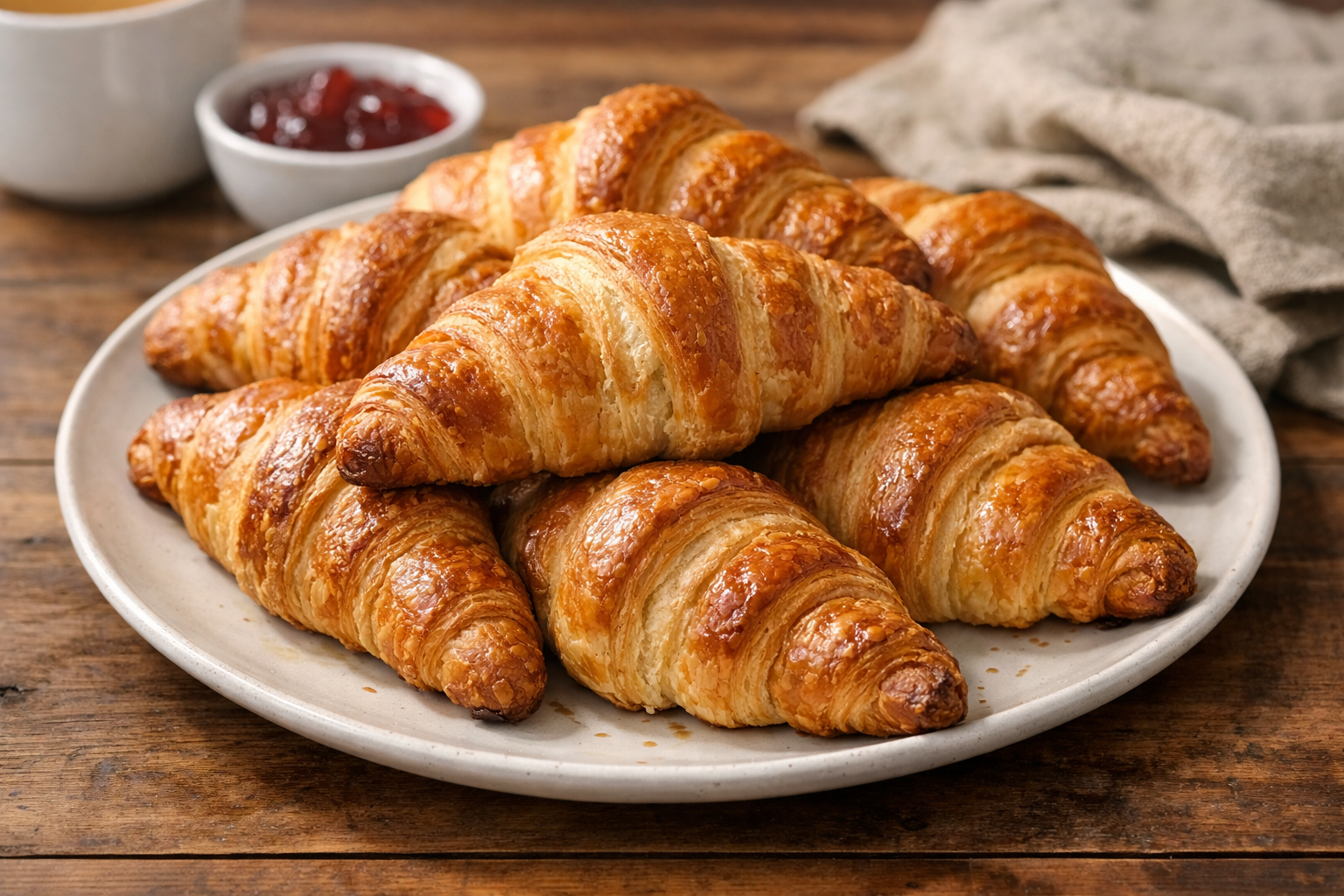
Croissants are one of the world’s most beloved breakfast pastries — light, flaky, buttery, and instantly recognizable by their distinctive crescent shape. But despite their iconic association with France, the story of the croissant actually begins far from Paris, in the imperial city of Vienna, Austria.
The Siege of Vienna: A Legendary Origin
The most popular story of the croissant’s origin dates back to 1686 (or, in some accounts, 1683), during the siege of Vienna by the Ottoman Turks. According to the legend, Turkish forces attempted to tunnel into the city under the cover of darkness. However, the city’s bakers — who worked through the night preparing the morning’s bread — heard the sounds of digging underground and raised the alarm, saving the city from invasion.
In recognition of their service, the bakers were commissioned to create a celebratory pastry. They shaped it as a crescent — the symbol on the Ottoman flag — so that eating the pastry would symbolically represent the defeat of the Turkish Empire. Historians debate the accuracy of this tale, but it remains one of the most charming origin stories in culinary history.
The Kipferl: The Croissant’s Austrian Ancestor
What is more certain is that the croissant evolved from an Austrian pastry called the kipferl — a crescent-shaped bread or pastry that had been baked in Austria since at least the 13th century. The kipferl was traditionally made with milk, wheat flour, sugar, butter, and salt, and was sweeter and denser than today’s French croissant.
The connection between the kipferl and the modern croissant is most often credited to August Zang, an Austrian artillery officer who opened a Viennese bakery in Paris in 1839 at 92 Rue de Richelieu. His bakery served Austrian specialties including the kipferl, which quickly became popular with Parisians. The French adopted and adapted the pastry, eventually developing their own version using laminated puff pastry — a distinctly French innovation.
From Viennoiserie to French Icon
The word “viennoiserie” — the category of French baked goods that includes croissants, pains au chocolat, and brioche — literally means “things from Vienna,” a nod to the Austrian origins of these pastries. By the early 20th century, French bakers had perfected the technique of laminating dough with butter to create the light, flaky layers that define the modern croissant.
The croissant became a symbol of French culinary excellence. By the mid-19th century, the word “croissant” (meaning “crescent” in French) had begun appearing in French culinary records. Today, French law regulates what can be called a croissant — it must be made with pure butter to be labelled a “croissant au beurre.”
The Croissant Today
The modern croissant is made using a technique called lamination, where dough is repeatedly folded and rolled with layers of butter to create dozens of paper-thin layers. When baked, the water in the butter turns to steam, pushing the layers apart and creating the characteristic flaky texture.
A well-made croissant should have a golden, crispy exterior and a soft, airy interior with a distinct honeycomb structure. The aroma of a freshly baked croissant — rich with butter and yeast — is one of the great pleasures of French baking.
From its humble beginnings as a symbol of military victory in Vienna to its status as a global icon of French pastry, the croissant has travelled an extraordinary journey. Whether enjoyed plain, filled with chocolate or almond cream, or simply dipped in coffee, the croissant remains one of the world’s most cherished breakfast treats. See more breakfast stories. Previous: Continental Breakfast, the light European morning tradition. Next: German Breakfast, a hearty spread of breads, cold cuts, and cheeses.
Croissants Video
Featured articles
Explore rich culinary stories, exclusive chef interviews, and expert insights from kitchens around the world. Discover cooking techniques, ingredient spotlights, and behind-the-scenes looks at the tools that shape global cuisine.
Georges Auguste Escoffier: Visionary Chef Who Revolutionized French Cuisine and Modern Cooking
Discover the life and legacy of Georges Auguste Escoffier, the legendary chef who transformed French cuisine and laid the foundation for modern culinary arts. This comprehensive historical profile …

How to Use a Knife, Fork, and Spoon
Master the basics of Western table etiquette with this guide to using a knife, fork, and spoon. Learn practical tips, cultural context, and the subtle rules that shape how we dine.

The History of Chocolate
Trace the fascinating history of chocolate, from its ancient origins with the Olmecs and Maya to its transformation into a global indulgence. Explore how cacao evolved from sacred ceremonial drink to …
Georges Auguste Escoffier: Visionary Chef Who Revolutionized French Cuisine and Modern Cooking
Discover the life and legacy of Georges Auguste Escoffier, the legendary chef who …
How to Use a Knife, Fork, and Spoon
Master the basics of Western table etiquette with this guide to using a knife, fork, and …
The History of Chocolate
Trace the fascinating history of chocolate, from its ancient origins with the Olmecs and …