Bulgarian Breakfast

By: Simon
July 20, 2026 | Updated: July 22, 2026
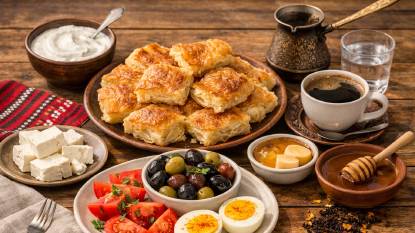

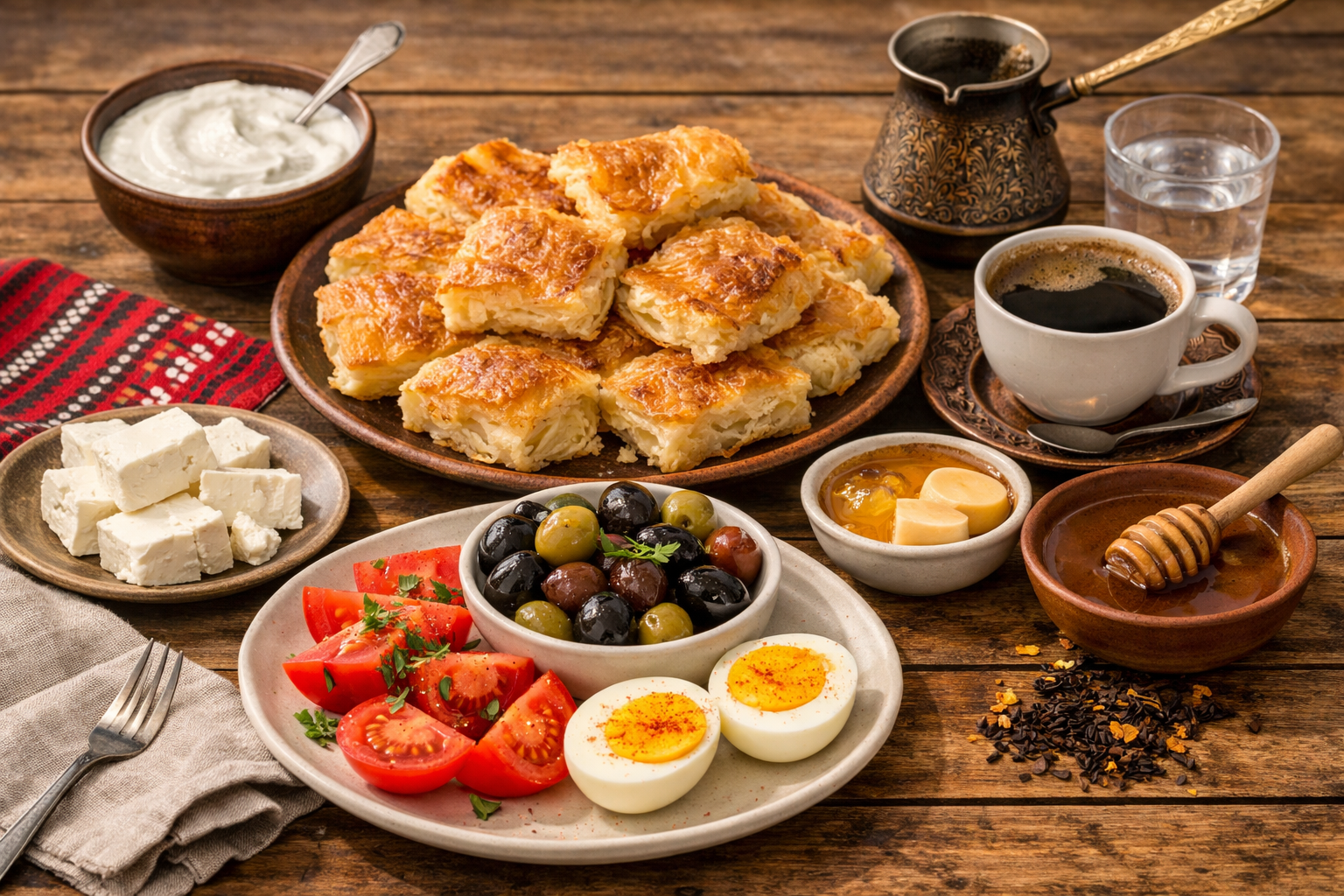
Breakfast in Bulgaria is a reflection of the country’s rich agricultural heritage and its position at the crossroads of European and Ottoman culinary traditions. A typical Bulgarian morning meal might include tea or Turkish coffee, sesame bread and butter, sheep’s milk cheese, honey, olives, tomatoes, boiled eggs, and, most importantly, yogurt.
Bulgarian Yogurt: A National Treasure
The Bulgarians have a larger percentage of centenarians in their population than most other parts of the world, and much of the credit for this is given to yogurt. Bulgaria is the historical namesake for Lactobacillus bulgaricus, the microorganism chiefly responsible for the country’s distinctive yogurt. The per-capita consumption of yogurt among Bulgarians is traditionally higher than the rest of Europe.
Bulgarian yogurt (kiselo mlyako) is thicker and tangier than most Western yogurts, with a distinctive sour flavour that comes from the specific bacterial culture used in its production. It is often eaten plain for breakfast, sometimes with honey, walnuts, or fresh fruit added.
Banitsa: The Iconic Breakfast Pastry
No discussion of Bulgarian breakfast would be complete without banitsa, a traditional pastry made by layering filo dough with a filling of beaten eggs and sirene (a white brine cheese similar to feta). The pastry is baked until golden and served warm, often with a side of yogurt.
Banitsa is so central to Bulgarian cuisine that it is eaten not only for breakfast but also as a snack or appetizer throughout the day. According to Bulgarian culinary tradition, specific versions of banitsa are prepared for holidays and special occasions, with fillings that might include pumpkin, spinach, or leeks.
The Bulgarian Breakfast Table
A traditional Bulgarian breakfast is a leisurely affair, built around fresh, locally sourced ingredients:
- Sirene cheese, a white brine cheese similar to Greek feta, served in chunks or crumbled over bread
- Fresh vegetables, tomatoes, cucumbers, and peppers, often served simply with a sprinkle of salt
- Boiled eggs, typically soft-boiled and eaten with bread
- Honey and jam, Bulgaria produces excellent honey, often served with fresh bread or pastries
- Turkish coffee, strong, unfiltered coffee served in small cups, a legacy of Ottoman influence
Bulgarian breakfast also often features various types of börek (savory filled pastries), mekitsi (deep-fried dough pieces, similar to donuts, often served with powdered sugar or jam), and kashkaval (yellow cheese made from cow’s milk, similar to cheddar).
The Yogurt Connection to Longevity
The connection between Bulgaria’s yogurt consumption and the country’s high proportion of centenarians has been noted by many observers. The probiotics found in Bulgarian yogurt, particularly Lactobacillus bulgaricus, are believed to contribute to digestive health and immune function.
While the centenarian claim has been debated, there is no doubt that yogurt remains at the heart of Bulgarian breakfast culture. It is one of the few foods that appears at nearly every meal, and Bulgarians consume it in quantities that far exceed the European average.
From the thick, tangy yogurt to the flaky, cheese-filled banitsa and the strong Turkish coffee that accompanies it all, Bulgarian breakfast is a celebration of the country’s agricultural bounty and its place at the crossroads of Balkan cuisine. See all global breakfast traditions. Before Bulgaria, discover Brunch, the late-morning meal that blends breakfast and lunch. Next, explore Caffeine and its transformative role in the history of breakfast.
Bulgarian Breakfast Video
Featured articles
Explore rich culinary stories, exclusive chef interviews, and expert insights from kitchens around the world. Discover cooking techniques, ingredient spotlights, and behind-the-scenes looks at the tools that shape global cuisine.
Georges Auguste Escoffier: Visionary Chef Who Revolutionized French Cuisine and Modern Cooking
Discover the life and legacy of Georges Auguste Escoffier, the legendary chef who transformed French cuisine and laid the foundation for modern culinary arts. This comprehensive historical profile …

How to Use a Knife, Fork, and Spoon
Master the basics of Western table etiquette with this guide to using a knife, fork, and spoon. Learn practical tips, cultural context, and the subtle rules that shape how we dine.

The History of Chocolate
Trace the fascinating history of chocolate, from its ancient origins with the Olmecs and Maya to its transformation into a global indulgence. Explore how cacao evolved from sacred ceremonial drink to …
Georges Auguste Escoffier: Visionary Chef Who Revolutionized French Cuisine and Modern Cooking
Discover the life and legacy of Georges Auguste Escoffier, the legendary chef who …
How to Use a Knife, Fork, and Spoon
Master the basics of Western table etiquette with this guide to using a knife, fork, and …
The History of Chocolate
Trace the fascinating history of chocolate, from its ancient origins with the Olmecs and …