Russian Breakfast

By: Simon
July 21, 2026 | Updated: July 22, 2026


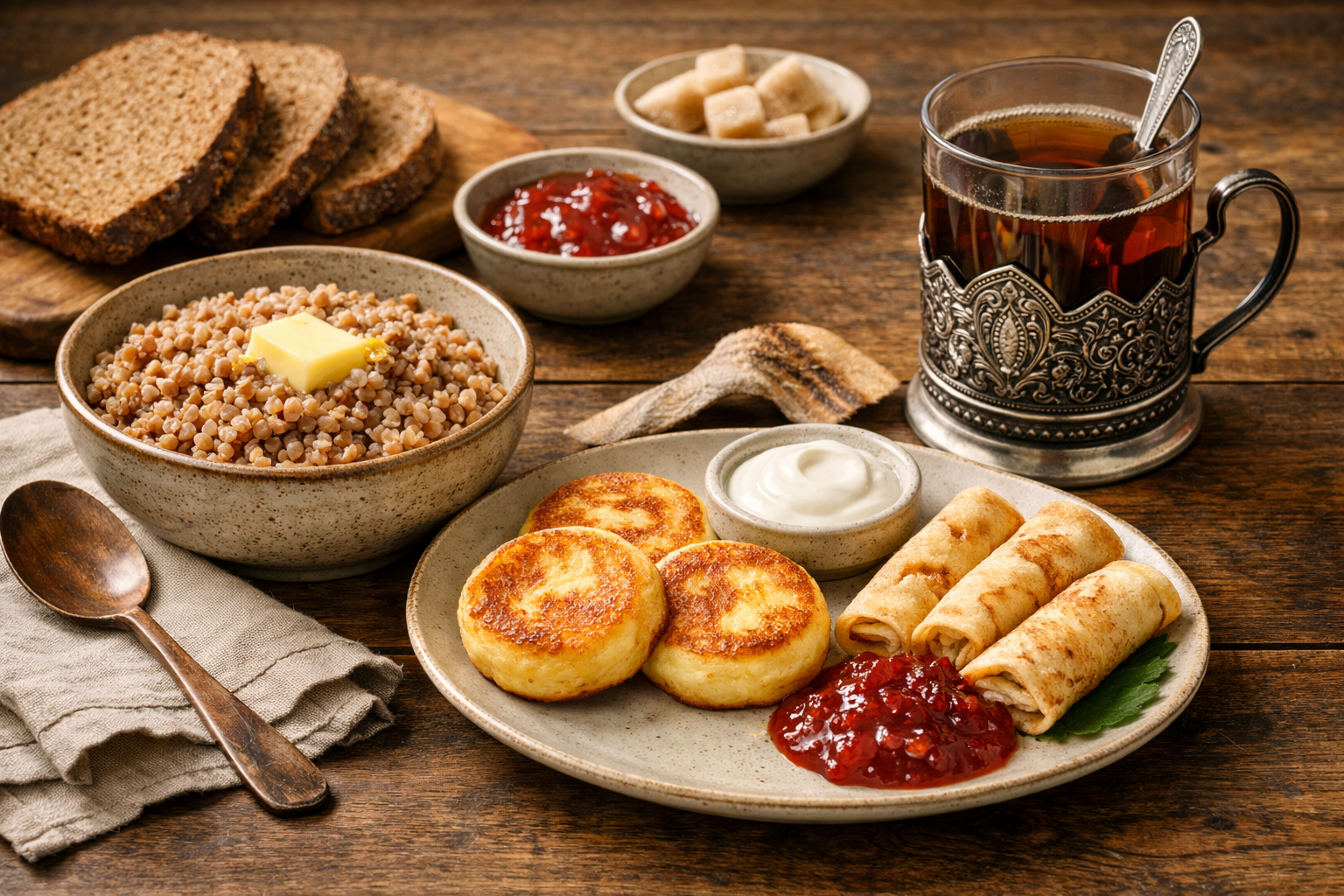
The Russian breakfast, or zavtrak, is a hearty affair designed to provide warmth and energy for long, cold mornings. Built around grains, dairy, and eggs, it is a cuisine of comfort and practicality. Strong hot tea, not coffee, is the preferred morning beverage for most Russians, and it accompanies nearly every breakfast dish.
Kasha: The Heart of the Russian Morning
The most iconic Russian breakfast food is kasha, a word that simply means porridge but encompasses a wide variety of grains. Kasha is not made with a specific sort of grain, although buckwheat kasha is the most familiar internationally. Millet, semolina (mannaya kasha), oats, and rice are also used. It is often served with tvorog (a soft curd cheese similar to ricotta), sour cream, butter, sugar, or jam.
According to Russian culinary tradition, kasha is one of the oldest and most revered dishes in the national cuisine. It appears in proverbs and folk tales, and was traditionally eaten from a shared pot by the whole family. Today, it remains a staple of the Russian breakfast table, particularly for children.
Blini, Syrniki, and Eggs
Beyond kasha, Russian breakfast offers a wealth of options. Blini, thin, yeasted pancakes similar to French crêpes, are served with sour cream (smetana), butter, jam, honey, or savoury fillings like smoked salmon. Syrniki are small, fried pancakes made from tvorog (farmer’s cheese), slightly sweetened and served with sour cream or jam. They are soft, creamy, and beloved by Russians of all ages.
Fried eggs (yaichnitsa) are another common breakfast, often cooked with sausage, ham, or vegetables. Buterbrody (open-faced sandwiches) made with rye bread, butter, cheese, sausage, or pickles are a quick weekday option. Black bread and cucumber pickles also make regular appearances on the Russian breakfast table.
Tea and the Samovar
While coffee has grown in popularity, strong hot tea remains the quintessential Russian breakfast beverage. Tea is traditionally brewed concentrated (zavarka) and then diluted with hot water at the table. It is served in a glass held in a metal podstakannik holder, often with sugar, lemon, or jam stirred in instead of milk. The samovar, a heated metal container for boiling water, is the traditional centrepiece of Russian tea service.
Russian breakfast is a celebration of simple, sustaining ingredients. This hearty, grain-centred approach differs from the precision of Japanese Breakfast and shares common ground with the rice-based breakfasts of Southeast Asian Breakfast, where leftovers from the previous night often appear at the morning table. Discover all breakfast traditions.
Russian Breakfast Video
Featured articles
Explore rich culinary stories, exclusive chef interviews, and expert insights from kitchens around the world. Discover cooking techniques, ingredient spotlights, and behind-the-scenes looks at the tools that shape global cuisine.
Georges Auguste Escoffier: Visionary Chef Who Revolutionized French Cuisine and Modern Cooking
Discover the life and legacy of Georges Auguste Escoffier, the legendary chef who transformed French cuisine and laid the foundation for modern culinary arts. This comprehensive historical profile …

How to Use a Knife, Fork, and Spoon
Master the basics of Western table etiquette with this guide to using a knife, fork, and spoon. Learn practical tips, cultural context, and the subtle rules that shape how we dine.

The History of Chocolate
Trace the fascinating history of chocolate, from its ancient origins with the Olmecs and Maya to its transformation into a global indulgence. Explore how cacao evolved from sacred ceremonial drink to …
Georges Auguste Escoffier: Visionary Chef Who Revolutionized French Cuisine and Modern Cooking
Discover the life and legacy of Georges Auguste Escoffier, the legendary chef who …
How to Use a Knife, Fork, and Spoon
Master the basics of Western table etiquette with this guide to using a knife, fork, and …
The History of Chocolate
Trace the fascinating history of chocolate, from its ancient origins with the Olmecs and …