Grits

By: Simon
July 21, 2026 | Updated: July 22, 2026
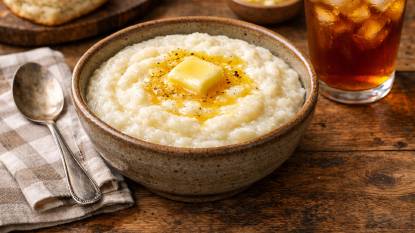

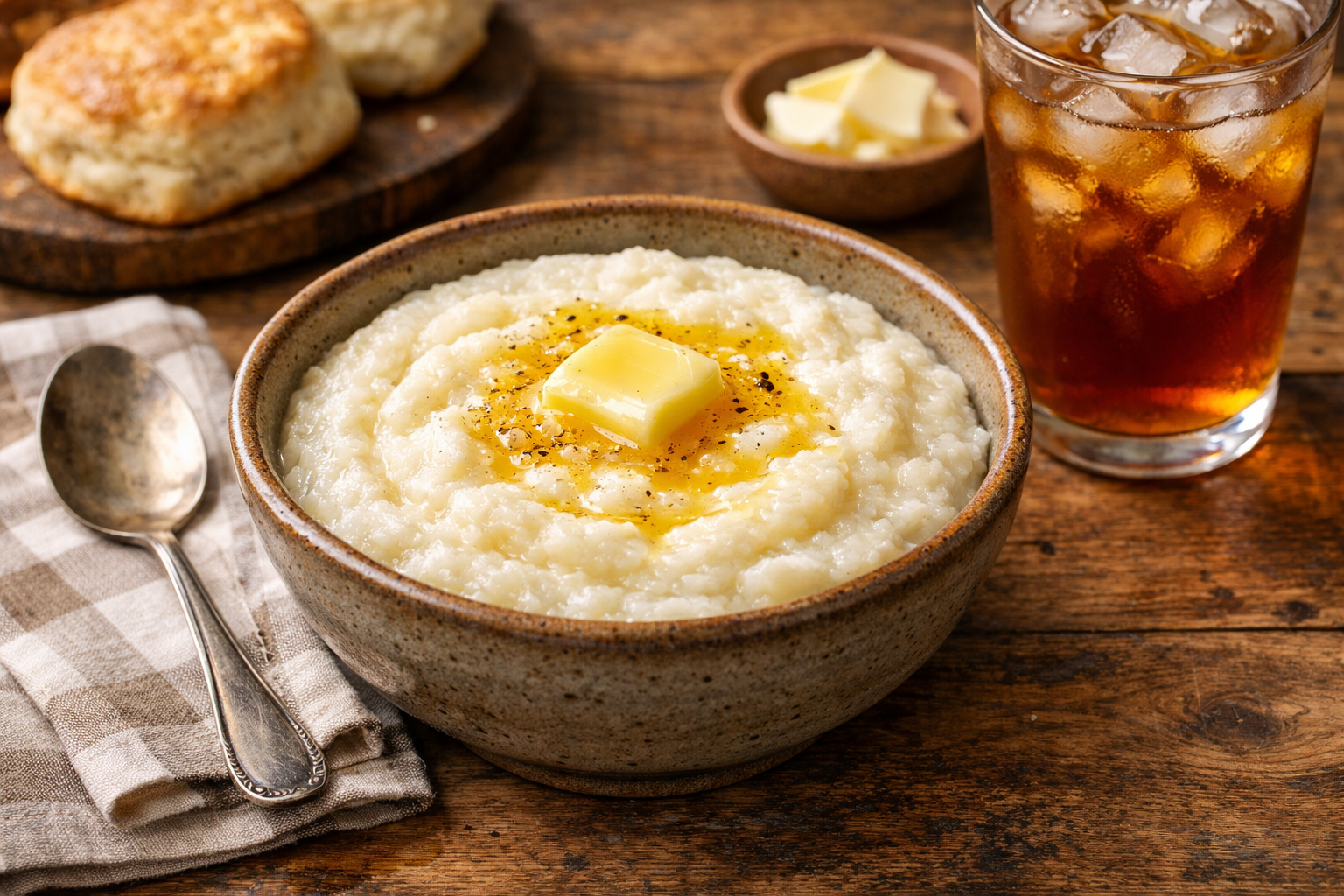
Grits are one of the most iconic breakfast foods in the American South, but their origins go back far beyond the United States. This humble corn porridge has a history that stretches back thousands of years to the indigenous peoples of the Americas, and its journey from Native American staple to Southern comfort food is a story of survival, adaptation, and culinary tradition.
Native American Origins
Grits begin with hominy, which is made from maize (corn) treated through a process called nixtamalization. Hominy was made by soaking maize in water mixed with ashes or burnt shells until the kernels puffed up and their hulls cracked and could be removed. This treatment changed the flavour and texture of the corn and made it easier to grind into flour.
The process also performed an essential nutritional function. The highly alkaline soaking solution (today, lime is used) worked on the balance of amino acids in the corn to release niacin that could not otherwise be absorbed by the body. The result was that Native Americans did not suffer from pellagra, as the Europeans who took the corn but not the nixtamalizing process later did. This technique dates back at least 3,500 years to Mesoamerica.
From Groats to Grits
Once the hominy is dried, it can be pounded into a coarse meal and cooked into porridge. European settlers adopted the dish from Native Americans and called it “groats”, their word for the familiar grain porridges they knew from home. Over the years, “groats” became “grits,” and the dish, for reasons that remain mysterious, became associated almost exclusively with the American South.
Grits are made from hominy ground to one of three textures: hominy grits (coarse), regular grits (medium), or instant grits (fine). Stone-ground grits, the most traditional variety, retain the germ of the corn kernel, giving them a richer flavour and more texture than commercially processed versions.
Grits at the Southern Table
In the American South, grits are far more than just breakfast. They appear alongside shrimp in the classic Lowcountry dish shrimp and grits, as a savoury side for fried catfish, and baked into casseroles with cheese and eggs. For breakfast, grits are most often served simply: creamy and steaming, with a generous pat of butter melting into the centre.
Traditional accompaniments include red-eye gravy (made from ham drippings and coffee), fried eggs, country ham, and crispy bacon. In recent years, grits have been elevated by chefs across the country, appearing on menus topped with poached eggs, grilled shrimp, braised greens, and aged cheeses.
The enduring appeal of grits lies in their versatility and their deep connection to Southern identity. Unlike the light and fleeting Greek Breakfast, grits are a substantial, grounding start to the day. And while they share common ground with other grain-based porridges around the world, they remain uniquely American, a direct link to Indian Breakfast traditions that also rely on rice and lentil porridges like khichri. Discover all breakfast traditions on our hub.
Grits Video
Featured articles
Explore rich culinary stories, exclusive chef interviews, and expert insights from kitchens around the world. Discover cooking techniques, ingredient spotlights, and behind-the-scenes looks at the tools that shape global cuisine.

Georges Auguste Escoffier: Visionary Chef Who Revolutionized French Cuisine and Modern Cooking
Discover the life and legacy of Georges Auguste Escoffier, the legendary chef who transformed French cuisine and laid the foundation for modern culinary arts. This comprehensive historical profile …

How to Use a Knife, Fork, and Spoon
Master the basics of Western table etiquette with this guide to using a knife, fork, and spoon. Learn practical tips, cultural context, and the subtle rules that shape how we dine.

The History of Chocolate
Trace the fascinating history of chocolate, from its ancient origins with the Olmecs and Maya to its transformation into a global indulgence. Explore how cacao evolved from sacred ceremonial drink to …
Georges Auguste Escoffier: Visionary Chef Who Revolutionized French Cuisine and Modern Cooking
Discover the life and legacy of Georges Auguste Escoffier, the legendary chef who …
How to Use a Knife, Fork, and Spoon
Master the basics of Western table etiquette with this guide to using a knife, fork, and …
The History of Chocolate
Trace the fascinating history of chocolate, from its ancient origins with the Olmecs and …