Soul Food: A Cuisine of Survival, Ingenuity, and Celebration

By: Simon
September 10, 2025 | Updated: February 17, 2026
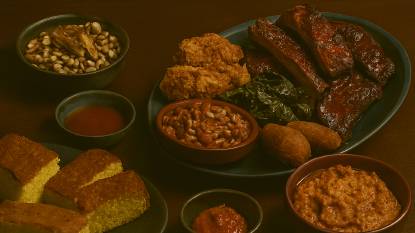


What we know as “soul food” is a stark reminder of the crimes of slavery as it is the descendant of African-American slave cooking. Now a celebrated part of Southern American Cuisine, it is the brilliant masterpiece that derived from want. Born from scarcity and shaped by resilience, soul food is a culinary tradition that transforms humble ingredients into deeply flavorful, nourishing dishes. It is a cuisine forged in the crucible of oppression, yet it sings with creativity, community, and cultural pride.
Slave cooking is distinct in its use of greens, beans, and the parts of the pig rejected at the plantation house: pig’s knuckles, ears, tripe, hog maws. These were added to the corn rations which were sometimes the only food allotted to the slaves. The meager pantry was further supplemented by wild game and fish pulled from the streams. Squirrel and possum figure among the meats used, catfish, trout, and shrimp among the fish.
Much soul food requires the use of only one pot, as time for cooking and money for its tools were both hard to come by. (A similar drive to conserve resources influenced the development of the wok and the Southeast Asian kitchen). Soul food, like all inspired cuisine, is greater than the sum of its parts. African and West Indian cooks and their offspring were unafraid of hot spices. Chiles figure boldly; Tabasco sauce is as prevalent as salt in soul kitchens.
🔥 Origins and Influences
Soul food is not just a style of cooking—it is a historical archive encoded with centuries of cultural adaptation, resistance, and creativity. Its roots trace directly to the culinary traditions of West Africa, where techniques like stewing, frying, and fermenting were foundational. Enslaved Africans brought with them deep agricultural knowledge and foodways that emphasized communal preparation, bold seasoning, and the use of indigenous crops such as okra, black-eyed peas, and yams. These ingredients—along with rice, which was cultivated by enslaved laborers in the Lowcountry of South Carolina and Georgia—formed the backbone of what would become soul food.
The improvisational genius of enslaved cooks was born from necessity. Given limited and often undesirable provisions—such as pig’s feet, ears, and intestines—they transformed scraps into sustenance through slow cooking, seasoning, and ingenuity. Preservation methods like smoking, pickling, and stewing were not only practical but also deeply rooted in African and Native American traditions. Cornmeal, introduced through Indigenous foodways, became a staple in the form of cornbread, hoecakes, and fritters, while sweet potatoes thrived in Southern soil and became a cornerstone of both savory and sweet dishes.
Soul food’s communal nature—potlucks, cookouts, church dinners, and Sunday suppers—is a continuation of African communal dining customs, where meals were shared from a central pot and cooking was a collective act. Recipes were passed down orally, often without written measurements, relying on instinct, memory, and taste. This oral tradition preserved not only techniques but also stories, values, and cultural identity.
Soul food is thus a living legacy—a cuisine shaped by forced migration, sustained by resilience, and celebrated through generations of African American cooks who turned survival into artistry.
🍽️ Signature Dishes of Soul Food
Below is a curated list of iconic soul food dishes, each with its own story and regional variation:
| Dish | Description |
|---|---|
| 🐷 Chitlins (Chitterlings) | Pig intestines, cleaned thoroughly, then boiled or fried in seasoned batter |
| 🥬 Mess o’ Greens | Collard or mustard greens slow-cooked with salt pork or smoked turkey |
| 🍚 Red Beans and Rice | A Louisiana staple with kidney beans, spices, and sausage over rice |
| 🍖 Barbecue Ribs | Pork ribs slow-cooked over fire pits, basted with tangy, spicy sauce |
| 🍠 Sweet Potato Croquettes | Mashed sweet potatoes mixed with spices, shaped and fried |
| 🥜 Peanut Croquettes | Ground peanuts blended with sweet potato or flour, fried until golden |
| 🦃 Cornbread-Stuffed Turkey | Turkey filled with cornbread dressing and giblet gravy |
| 🌽 Corn Fritters | Fried cornmeal batter with whole corn kernels, crispy and sweet |
| 🐟 Fried Catfish | Cornmeal-dredged catfish fillets, deep-fried and served with hot sauce |
| 🍞 Hot Water Cornbread | Cornmeal mixed with boiling water, shaped into patties and pan-fried |
| 🫘 Black-Eyed Peas | Simmered with onion, garlic, and smoked meat—often served on New Year’s Day |
| 🍰 Sweet Potato Pie | A spiced, custard-like pie made from mashed sweet potatoes |
🌶️ Spice, Smoke, and Soul
Soul food is unapologetically bold. Heat comes not just from chiles and pepper, but from the slow burn of smoked meats and the tang of vinegar-based sauces. Tabasco, cayenne, and crushed red pepper are pantry staples. Seasoning is layered, not sprinkled—onions, garlic, celery, and bell peppers form the “holy trinity” of flavor in many dishes.
Cooking methods are rooted in practicality: braising, stewing, frying, and smoking. These techniques maximize flavor while minimizing waste. A pot of greens might simmer for hours, absorbing the richness of smoked meat and the depth of spices.
🧡 More Than a Meal
Soul food is a celebration of survival. It is the taste of Sunday dinners, of Juneteenth gatherings, of family reunions under magnolia trees. It is a cuisine that honors the past while nourishing the present. Every bite carries history—of struggle, of joy, of ingenuity.
While soul food reflects the ingenuity of African American cooks in the rural South, Creole and Cajun cuisines emerged from Louisiana’s multicultural port cities, blending French, Spanish, African, and Caribbean influences into dishes rich with roux, seafood, and bold seasoning.
To eat soul food is to participate in a legacy. It is not just comfort food—it is cultural memory, served hot.
History of Soul Food [Video]
Featured Articles
Explore rich culinary stories, exclusive chef interviews, and expert insights from kitchens around the world. Discover cooking techniques, ingredient spotlights, and behind-the-scenes looks at the tools that shape global cuisine.

Georges Auguste Escoffier: Visionary Chef Who Revolutionized French Cuisine and Modern Cooking
Discover the life and legacy of Georges Auguste Escoffier, the legendary chef who transformed French cuisine and laid the foundation for modern culinary arts. This comprehensive historical profile …
How to Use a Knife, Fork, and Spoon
Master the basics of Western table etiquette with this guide to using a knife, fork, and spoon. Learn practical tips, cultural context, and the subtle rules that shape how we dine.

The History of Chocolate
Trace the fascinating history of chocolate—from its ancient origins with the Olmecs and Maya to its transformation into a global indulgence. Explore how cacao evolved from sacred ceremonial drink to …
Georges Auguste Escoffier: Visionary Chef Who Revolutionized French Cuisine and Modern Cooking
Discover the life and legacy of Georges Auguste Escoffier, the legendary chef who …
How to Use a Knife, Fork, and Spoon
Master the basics of Western table etiquette with this guide to using a knife, fork, and …
The History of Chocolate
Trace the fascinating history of chocolate—from its ancient origins with the Olmecs and …