The American Southwest

By: Simon
September 10, 2025 | Updated: February 17, 2026
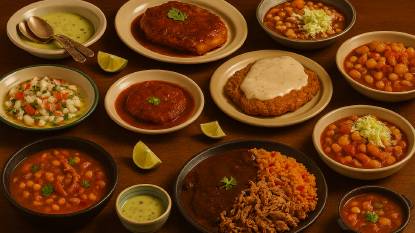


Welcome to one of the most famous regions of North American Cuisine. Southwestern cooking includes New Mexico, Texas, and southern California—regions where the land itself seems to shape the plate. Its most salient characteristic is its entirely Spanish and Native American orientation, and, unlike parts of the South and New England, its utter imperviousness to the cooking of England and France. Here, the culinary dialect is spoken in chiles, masa, and smoke—not butter, cream, or roux.
🌵 Southwestern Cooking: Fire, Earth, and Heritage
The chile sets this food in its own sphere. First grown in Mexico and Guatemala, the chile had an enormous impact on cooking all around the globe when Portuguese and Spanish traders first exported it. It had virtually no impact on American cooking north of the Mason-Dixon line or, for that matter, anywhere outside of Spanish colonial territory. But within the Spanish territories, chiles, in all their many forms and fires, reigned supreme. They are not just ingredients—they are cultural markers, flavor signatures, and, in many cases, obsessions.
🌶️ New Mexicans are famous for their green chiles. Green chiles are allegedly (and empirically, if you ask me) addictive, and they have such a power over the palate that virtually no day or dish can escape their fresh and utterly unique flavor. Roasted, peeled, and chopped, they find their way into stews, eggs, enchiladas, and even burgers. The annual chile harvest is not just agricultural—it’s ceremonial.
Other basic ingredients used in Southwestern cuisine are beans, hominy (called “samp” when made from white corn and “hulled corn” when made from yellow corn), corn and flour tortillas, pork, avocados, pine nuts, cilantro, limes, rice, and, in some regions, cheese. Red beans of the Southeast give way to wonderful black beans—earthy, creamy, and often simmered with garlic and cumin. Tortillas, both corn and flour, are not mere vessels but foundational elements, as essential as bread in other traditions.
🫘 The pantry of the Southwest is a study in contrasts: ancient grains and modern adaptations, indigenous staples and colonial imports. Pork is often slow-cooked and shredded, tucked into tamales or folded into tacos. Avocados and limes bring brightness, while pine nuts—harvested from native pinyon trees—add a delicate crunch to sauces and salsas.
Tostadas, tamales, tacos, burritos, and flautas—the common fare of Mexican restaurants—have equally strong roots in what is now American soil. These dishes are not borrowed; they are inherited. They reflect centuries of continuity, adaptation, and regional pride. In the Southwest, food is not just sustenance—it’s a living archive of migration, resistance, and celebration.
🪶 Southwestern cooking is elemental: fire-roasted, sun-dried, stone-ground. It is a cuisine of landscape and legacy, where every bite carries the imprint of desert wind, volcanic soil, and ancestral memory.
🌶️ Southwestern Dishes: A Regional Table of Fire and Flavor
The American Southwest is a culinary frontier shaped by desert heat, indigenous wisdom, and Spanish colonial legacy. Its dishes are bold, elemental, and deeply rooted in tradition—each one a reflection of the land and the people who’ve called it home. From coastal ceviche to high desert posole, here’s a curated selection of Southwestern staples that define the region’s palate.
🥑 Avocado Soup
This refreshing soup begins with a base of chicken stock, into which chayote—a mild, pear-shaped squash—and ripe avocado are added. The result is a silky, vegetal broth with subtle richness and a whisper of sweetness. Often served chilled, it’s a cooling antidote to the region’s arid heat.
🐖 Carne Adobado
Marinated pork is baked in a smooth adobo sauce made from red chiles, garlic, vinegar, and onion. The dish is smoky, tangy, and deeply satisfying—its flavor profile shaped by centuries of Spanish and indigenous technique. Often served with tortillas or rice, carne adobado is a cornerstone of New Mexican home cooking.
🐟 Ceviche
Ceviche (or seviche) is fish or shellfish that has been “cooked” in a marinade of lime or other citrus juice. In the Southwest, it’s unique to the coastal areas—particularly southern California—where fresh seafood meets Latin American tradition. Bright, acidic, and often spiked with cilantro and jalapeño, ceviche is a celebration of freshness and restraint.
🥩 Chicken-Fried Steak
This dish somehow says “Texas.” A cut of steak is battered, deep-fried, and served smothered in creamy white gravy. It’s comfort food with swagger—crispy on the outside, tender within, and unapologetically indulgent. Though its name nods to poultry, its soul is pure beef and Southern grit.
🌶️ Chili con Carne
Chili is an American classic, but no two bowls are the same. Some Texans reject tomatoes entirely, favoring a purist blend of beef and dried chiles. New Mexicans might use lamb and green chile. Beans are optional, controversial, and often omitted. The only constants: meat and heat. Chili con carne is less a recipe than a regional manifesto.
🍲 Menudo
A filling soup of hominy, beef tripe, and pig’s feet, flavored with chile, garlic, coriander, and onions. Menudo is traditionally served on weekends and holidays, and many consider it a cure for hangovers. Its gelatinous texture and bold seasoning make it a dish of devotion—loved by many, feared by some, but undeniably iconic.
🦃 Mole with Turkey
Mole is a sauce of staggering complexity, made from chile powder, unsweetened chocolate, almonds, garlic, cinnamon, anise, raisins, coriander, tomatoes, sesame seeds, black pepper, and bay leaf. Ground fine and simmered slowly, it’s a dark, velvety sauce that typically accompanies poultry. Mole is not just a flavor—it’s a ritual, a celebration, and a culinary achievement.
🌽 Posole
This thick soup is made from hominy stewed with red chile, pork, and oregano. Posole is hearty, earthy, and deeply comforting—often served with shredded cabbage, radishes, lime wedges, and tostadas. It’s a dish of ceremony and sustenance, eaten during holidays and family gatherings across New Mexico and beyond.
Each of these dishes reflects the Southwest’s layered identity—indigenous, colonial, and contemporary. They are not just meals but cultural expressions, shaped by geography, memory, and fire.
Southwest Cuisine in the Old West [Video]
Featured Articles
Explore rich culinary stories, exclusive chef interviews, and expert insights from kitchens around the world. Discover cooking techniques, ingredient spotlights, and behind-the-scenes looks at the tools that shape global cuisine.

Georges Auguste Escoffier: Visionary Chef Who Revolutionized French Cuisine and Modern Cooking
Discover the life and legacy of Georges Auguste Escoffier, the legendary chef who transformed French cuisine and laid the foundation for modern culinary arts. This comprehensive historical profile …

How to Use a Knife, Fork, and Spoon
Master the basics of Western table etiquette with this guide to using a knife, fork, and spoon. Learn practical tips, cultural context, and the subtle rules that shape how we dine.

The History of Chocolate
Trace the fascinating history of chocolate—from its ancient origins with the Olmecs and Maya to its transformation into a global indulgence. Explore how cacao evolved from sacred ceremonial drink to …
Georges Auguste Escoffier: Visionary Chef Who Revolutionized French Cuisine and Modern Cooking
Discover the life and legacy of Georges Auguste Escoffier, the legendary chef who …
How to Use a Knife, Fork, and Spoon
Master the basics of Western table etiquette with this guide to using a knife, fork, and …
The History of Chocolate
Trace the fascinating history of chocolate—from its ancient origins with the Olmecs and …