The American South

By: Simon
September 10, 2025 | Updated: February 17, 2026
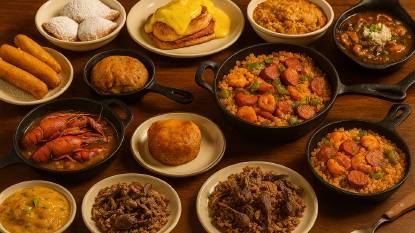


If New Englanders were satisfied with the fruits of their cold sea and rocky land, then the colonial South must have been paradise. The colonists in Virginia and South Carolina were less encumbered by the weight of the long northern winters and the scorn of the Puritan God. Pleasures came more easily, and the American South was a cornucopia—lush, fertile, and forgiving. Tobacco thrived, rice flourished, and the long growing season offered a bounty that shaped not only the economy but the table. Southern hospitality is genuine and the region’s food is revered among USA Cuisine aficionados.
A Culinary Mosaic
Originally under the culinary sway of the British bourgeoisie, Southern cooking began as a reflection of colonial hierarchy—roasts, puddings, and pies echoing the tastes of London’s upper crust. But the region was never a monoculture. French techniques drifted in from Louisiana, Spanish flavors arrived from the west and south, and Native American staples like corn, squash, and game were foundational. African culinary traditions, carried by enslaved peoples, brought depth, seasoning, and entirely new methods—transforming the Southern kitchen into a crucible of cultural exchange.
The South soon asserted its culinary autonomy—or perhaps autonomies is more to the point. There are several broad “schools” of Southern cooking: classic Southern, with its buttermilk biscuits, fried chicken, and collard greens; Cajun and Creole, born of bayou pragmatism and New Orleans elegance; and soul food, a cuisine of resilience and remembrance, rooted in African American experience.
Today, Southern food has borrowed from itself so thoroughly that these categories are nearly impossible to maintain. They serve less as rigid definitions and more as historical coordinates—markers that help us trace the lineage of flavors now mingled across kitchens, cookouts, and fine dining rooms alike. The American South is not a single cuisine but a living mosaic, where every dish tells a story of migration, adaptation, and enduring identity.
🏛️ “Classic” Southern Cooking: Aristocracy on the American Table
In the late 18th century, the French Revolution transformed France from sinful glutton to hero in the American imagination. A camaraderie seemed natural between two countries who had shaken off the yoke of the aristocracy. Ironically, the influx of French chefs—eager to escape a homeland where their patrons were now the persecuted class—led to the development among Americans of a taste for sophisticated French haute cuisine.
Virginian Thomas Jefferson was an early champion of French food. He hired a French chef for his White House (President Clinton was the first since then to serve American food instead of French in the White House), and became involved in the project of combining superior New World ingredients, colonial Virginia cooking, and the age-old wisdom of France. Jefferson’s culinary diplomacy wasn’t just symbolic—it was foundational. His table became a laboratory for merging French precision with Southern abundance.
The famous salty hams, the legumes, hominy ground into grits laced with cream and butter, griddle cakes, and the bounty of the sea worked together with French methods to produce terrapin stew, corn and oyster fritters, grilled rabbit with chestnut spoon bread, crab cakes, or a green tomato tart. These dishes weren’t just meals—they were statements of refinement, hospitality, and regional pride.
“Classic” Southern or plantation cooking, then, is French filtered through the British New World. It is a cuisine of convergence: aristocratic technique meeting agrarian abundance. The plantation kitchen became a crucible where imported elegance met indigenous ingredients—okra, sweet potatoes, wild game, and shellfish—all elevated through French sauces, reductions, and pastry work.
🦀 This style of cooking laid the groundwork for what would become the Southern culinary canon: rich, layered, and unapologetically indulgent. It is the ancestor of modern Southern fine dining, where heritage and haute cuisine still share the plate.
🍽️ Some Pan-Southern Dishes: A Regional Tasting Menu
Southern cuisine is not a monolith—it’s a patchwork of traditions stitched together by geography, migration, and memory. Across the South, dishes travel between Creole refinement, Cajun rusticity, soul food resilience, and pan-Southern practicality. What follows is a curated tasting menu of iconic preparations that speak to the region’s diversity and depth.
🍩 Beignets (Creole)
Beignet means “fritter” in French. These yeast pastries, deep-fried and served hot, are a traditional specialty of New Orleans. They can be savory or sweet, though the powdered sugar-dusted version served at Café du Monde has become a cultural icon. Crispy on the outside, pillowy within, beignets are often paired with chicory coffee and eaten at all hours—proof that dessert needn’t wait for dinner.
🍗 Chicken Rochambeau (Creole)
A layered dish of aristocratic ambition, Chicken Rochambeau begins with a melba-toast-like base called holland rusk. On top: slices of ham and a mushroom sauce. Then comes a butter-sautéed chicken breast, crowned with a tarragon-laced hollandaise. It’s a dish that channels French technique through Southern indulgence—rich, layered, and unapologetically decadent.
🌽 Corn Dodgers (Soul)
Cornmeal and water are made into a thick dough that’s shaped into finger-sized rolls and grilled until browned on a hot griddle. Originally a survival food, corn dodgers are now a soul food staple—crispy, chewy, and deeply satisfying. They pair beautifully with stews, greens, or simply a pat of butter.
🫓 Cracklin’ Bread (Soul)
During slavery, after the pork fat was rendered by the slave-owner, the leftover cracklings were given to the enslaved cooks, who stirred them into cornbread batter. The result: cracklin’ bread, a dish of ingenuity and flavor. Salty, crunchy bits of pork embedded in soft cornbread—this is soul food at its most resourceful and delicious.
🦞 Crawfish Étouffée (Cajun)
Literally meaning “smothered,” étouffée is a Cajun dish where crawfish are enveloped in a stew of onions, bell peppers, and celery—the holy trinity of Cajun aromatics. The sauce is thickened with a roux and simmered until the flavors meld into a rich, velvety gravy. Served over rice, it’s a dish that speaks of bayou abundance and slow-cooked care.
🍲 Gumbo Filé (Cajun)
Cajun gumbo begins with a deep brown roux, followed by vegetables—pepper, onion, celery, garlic, and tomato—and a seafood stock made from shellfish shells, bay leaf, thyme, and black pepper. Okra, brought by African slaves, or filé powder (ground sassafras leaves), borrowed from Native American cooks, is added as a thickener. After hours of simmering, fresh shrimp and crab are folded in, and the gumbo is ladled over buttered rice. It’s not just a dish—it’s a cultural archive in a bowl.
🫘 Hoppin’ John (Pan-Southern) & 🍛 Jambalaya (Cajun)
Hoppin’ John is a stew of black-eyed peas and rice, traditionally served on New Year’s Day to bring luck and prosperity. Jambalaya, by contrast, is a Cajun rice dish that blends stock, vegetables, and meats—duck, sausage, chicken, or seafood. Its Spanish roots echo paella, but its soul is pure Louisiana. Both dishes reflect the South’s love of rice-based comfort food, each with its own rhythm and spice.
🐦 Rice Bird Pilau, or Perloo (Pan-Southern)
From The Savannah Cook Book (1933), this dish stews a dozen rice birds—heads included—in seasoned water. Once cooked, rice is added to the broth, boiled, and then steamed with the birds until dry and grainy. The result is a gamey, aromatic pilau that speaks to a time when wild birds were a common protein and nothing went to waste. As Harriet Ross Colquitt wrote, “Even if the birds don’t sing, you will have to admit that the dish is fit to set before a King!”
🦪 Scalloped Oysters (Pan-Southern)
One of many Southern oyster recipes, scalloped oysters are baked between layers of buttered bread crumbs until golden brown. The dish is simple but elegant—briny, creamy, and crisp. Often served at holiday tables or coastal gatherings, it’s a reminder that Southern cooking can be both rustic and refined.
These dishes, drawn from across the Southern spectrum, reflect not just regional tastes but the histories behind them. From the resourcefulness of soul food to the layered elegance of Creole cuisine, each plate tells a story of place, people, and perseverance.
Most Iconic Southern foods [Video]
Featured Articles
Explore rich culinary stories, exclusive chef interviews, and expert insights from kitchens around the world. Discover cooking techniques, ingredient spotlights, and behind-the-scenes looks at the tools that shape global cuisine.

Georges Auguste Escoffier: Visionary Chef Who Revolutionized French Cuisine and Modern Cooking
Discover the life and legacy of Georges Auguste Escoffier, the legendary chef who transformed French cuisine and laid the foundation for modern culinary arts. This comprehensive historical profile …
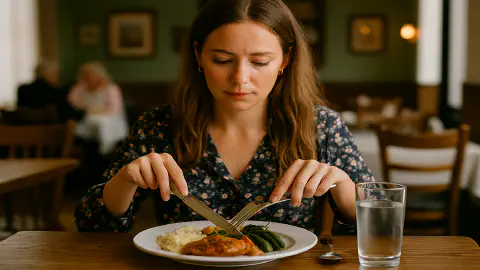
How to Use a Knife, Fork, and Spoon
Master the basics of Western table etiquette with this guide to using a knife, fork, and spoon. Learn practical tips, cultural context, and the subtle rules that shape how we dine.
The History of Chocolate
Trace the fascinating history of chocolate—from its ancient origins with the Olmecs and Maya to its transformation into a global indulgence. Explore how cacao evolved from sacred ceremonial drink to …
Georges Auguste Escoffier: Visionary Chef Who Revolutionized French Cuisine and Modern Cooking
Discover the life and legacy of Georges Auguste Escoffier, the legendary chef who …
How to Use a Knife, Fork, and Spoon
Master the basics of Western table etiquette with this guide to using a knife, fork, and …
The History of Chocolate
Trace the fascinating history of chocolate—from its ancient origins with the Olmecs and …