USA Cuisine
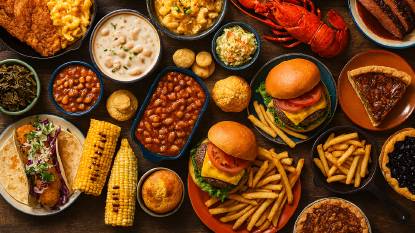

American cuisine is often dismissed as a culinary patchwork—too sprawling, too derivative, too commercial to be taken seriously. But beneath the stereotypes lies a dynamic, regionally driven food culture that defies easy categorization. From the smoke-filled kitchens of the Deep South to the produce-rich valleys of California, the American table is shaped not by a single tradition, but by a restless spirit of adaptation. In the landscape of global cuisine, the United States functions less as a keeper of tradition and more as a catalyst—absorbing, remixing, and reimagining world cuisines through its immigrant roots and regional abundance. This article explores how a nation without a unified culinary language has, paradoxically, created one of the most inventive and expressive food cultures in the world.
🧭 A Culinary Identity Crisis—or a Strength?
American food has long suffered from a reputation problem. Critics point to its lack of a singular identity, its industrialized fast food culture, and its tendency to borrow rather than originate. But this critique misses the point: America’s culinary strength lies in its refusal to be pinned down.
Unlike nations with centuries-old culinary codes—France with its sauces, Japan with its knife work—America thrives on pluralism. Its cuisine is a living document, constantly revised by immigration, innovation, and regionalism.
“Trying to define American cuisine is like trying to bottle the wind,” wrote food historian Paul Freedman. “It’s everywhere and nowhere, and that’s its genius.”
🌎 Regional Cuisines: The True Backbone
America’s culinary soul resides in its regions—each shaped by geography, immigration, and indigenous traditions. These aren’t just local quirks; they’re distinct culinary ecosystems.
| Region | Signature Dishes & Influences |
|---|---|
| The South | Fried chicken, gumbo, shrimp & grits, collard greens—African, French, and Native roots |
| Southwest | Hatch green chiles, carne adovada, Navajo fry bread—Mexican and Pueblo influences |
| Midwest | Sauerbraten, hotdish, pierogi—German, Scandinavian, and Polish immigrant “real food” |
| New England | Cornbread, baked beans, clam chowder—Puritan simplicity meets coastal abundance |
🔥 The American South
A tapestry of African, Native American, and European influences, Southern American cuisine is bold, soulful, and deeply rooted.
Cajun and Creole cuisine represent two distinct yet intertwined culinary traditions that define the flavor of Louisiana. Rooted in French, Spanish, African, Caribbean, and Native American influences, these styles reflect centuries of migration, adaptation, and cultural fusion. Cajun cooking, born from the resourceful spirit of French Canadian exiles, favors bold spices, cast iron pots, and one-pot meals like gumbo and jambalaya. Creole cuisine, shaped by New Orleans’ cosmopolitan heritage, leans into refined techniques and rich sauces, producing elegant dishes such as shrimp rémoulade and pompano en papillote. Together, they form a vibrant culinary dialect—one rustic, one regal—each telling its own story through roux, rice, and seafood. For a deeper dive into their origins, ingredients, and iconic dishes, explore our full feature on Cajun and Creole Cooking.
- Shrimp and Grits: Creamy stone-ground grits topped with sautéed Gulf shrimp, bacon, and scallions.
- Gumbo: A thick stew of okra, roux, and seafood or sausage, born from West African and French techniques.
- Buttermilk Biscuits: Flaky, buttery, and often served with gravy or honey.
🌶️ The Southwest
Defined by arid landscapes and indigenous crops, Southwestern American Cuisine blends Mexican, Pueblo, and cowboy traditions.
The culinary identity of the American Southwest is forged in heat—both from the sun and the chile. Defined by arid landscapes, ancestral crops, and centuries of cultural exchange, this region blends Mexican, Pueblo, and cowboy traditions into a cuisine that is rugged, resourceful, and deeply expressive. Here, food is inseparable from place: Hatch green chiles are not just ingredients but seasonal rituals; pork is slow-cooked in adovada until it yields to the fire-red sauce; and Navajo fry bread, born of scarcity and survival, becomes a canvas for both savory stews and sweet indulgence. These dishes are more than recipes—they are edible testaments to endurance, adaptation, and the enduring spirit of the Southwest.
- Hatch Green Chile Stew: A fiery, fragrant dish made with roasted chiles, pork, and potatoes.
- Carne Adovada: Pork marinated in rsouled chile sauce, slow-cooked until tender.
- Navajo Fry Bread: A deep-fried flatbread served with savory or sweet toppings.
🌽 The Midwest
Often dismissed as bland, American Midwestern Cuisine is a bastion of hearty, immigrant-rooted cooking.
The Midwest may lack the culinary bravado of the coasts, but beneath its modest exterior lies a rich, immigrant-rooted tradition of comfort and resilience. Defined by practicality and abundance, Midwestern cooking draws heavily from German, Polish, Scandinavian, and Czech influences—each bringing their own techniques, flavors, and preservation methods to the heartland. This is a region where casseroles are communal, dumplings are sacred, and slow-roasted meats are a Sunday ritual. From Minnesota’s iconic hotdish—layered with ground beef, canned soup, and tater tots
- Hotdish: A casserole of ground beef, canned soup, and tater tots—Minnesota’s comfort classic.
- Sauerbraten: German-style marinated roast beef, served with red cabbage and spaetzle.
- Pierogi: Polish dumplings stuffed with potato, cheese, or sauerkraut, often pan-fried in butter.
🐟 New England
Puritan restraint meets coastal bounty in this region’s simple, satisfying fare.
New England’s culinary identity is shaped by contradiction—Puritan restraint on one hand, and the abundance of the Atlantic coast on the other. This is a region where simplicity is elevated to tradition, and modest ingredients are transformed through patience and preservation. Rooted in colonial practicality and maritime necessity, New England fare favors slow cooking, subtle seasoning, and deep comfort. Clam chowder, thick with cream and briny shellfish, speaks to the region’s seafaring legacy. Brown bread, steamed in coffee cans and sweetened with molasses, reflects the ingenuity of early settlers. And baked beans, simmered with salt pork and maple syrup, offer a glimpse into a cuisine that values warmth, thrift, and quiet satisfaction. In New England, food is not flamboyant—it’s foundational.
- Clam Chowder: Creamy soup with clams, potatoes, and salt pork—served in bread bowls or porcelain cups.
- Brown Bread: Steamed molasses bread, traditionally cooked in coffee cans.
- Baked Beans: Slow-cooked navy beans with salt pork and maple syrup.
🍽️ Post-War Awakening: The Beard Effect
The culinary turning point in American history arrived not in a kitchen, but on the heels of war. After World War II, thousands of American servicemen and women returned home having tasted the richness of Continental cuisine—French sauces, Italian pastas, and the ritual of multi-course meals. This exposure planted the seeds of a cultural shift: food was no longer just sustenance, it could be art, identity, and pleasure.
At the center of this awakening stood James Beard, a towering figure in American gastronomy. Born in Portland, Oregon, Beard had studied theater before turning to food, and his flair for performance translated into his writing and teaching. His 1946 book Cook It Outdoors was one of the first American cookbooks to treat grilling as a culinary craft rather than a backyard pastime. Over the next four decades, Beard published more than 20 cookbooks, hosted television programs, and mentored generations of chefs. He championed American ingredients - from Oregon salmon to Georgia peaches—and insisted that regional cooking deserved the same respect as European haute cuisine.
“Food is our common ground, a universal experience,” Beard famously wrote, framing cooking as both democratic and expressive.
🔑 Key Figures Who Redefined the American Table
👩🍳 Julia Child
A former OSS intelligence officer turned culinary icon, Julia Child studied at Le Cordon Bleu in Paris and brought French technique to American households with her seminal 1961 book Mastering the Art of French Cooking. Her PBS show The French Chef debuted in 1963, demystifying soufflés and boeuf bourguignon for a generation raised on canned soup and TV dinners. Child’s exuberance and precision made her a household name—and turned cooking into a national pastime.
📰 Craig Claiborne
As food editor of The New York Times from 1957 to 1986, Claiborne revolutionized food journalism. He introduced the first star-rating system for restaurants, legitimized restaurant criticism, and gave serious coverage to chefs and culinary trends. His reviews and recipes elevated food writing from lifestyle fluff to cultural commentary, and he helped launch the careers of chefs like Jean-Georges Vongerichten and Wolfgang Puck.
🌱 Alice Waters
In 1971, Alice Waters opened Chez Panisse in Berkeley, California, with a simple mission: serve fresh, seasonal food sourced from local farms. Inspired by the Provençal markets she’d visited in France, Waters rejected industrial agriculture and embraced farm-to-table dining decades before it became mainstream. Her influence reshaped American restaurant sourcing, and her advocacy helped spawn farmers’ markets, school garden programs, and sustainable food policy.
Together, Beard, Child, Claiborne, and Waters laid the foundation for a chef-driven culture that prized creativity, locality, and technique. They shifted American cooking from convenience to craft, from mass production to personal expression. Their legacy is visible in every tasting menu, farmers’ market, and food memoir that followed.
Their influence shifted American cooking from convenience to craft, laying the groundwork for the chef-driven culture that followed.
🔥 Freedom to Improvise: The Chef’s Playground
American chefs, unburdened by centuries of culinary orthodoxy, began to experiment. They borrowed techniques, fused flavors, and reimagined traditions.
Exemplars of Innovation:
- Larry Forgione: At An American Place, he sourced exclusively from U.S. farms, reviving native ingredients like Jerusalem artichokes and wild rice.
- David Burke: Known for playful dishes like pastrami salmon and cheesecake lollipops, blending whimsy with technique.
- Anne Rosenzweig: One of the first female chefs in NYC fine dining, she merged French precision with American seasonality.
- Waldy Malouf: At Beacon, he used wood-fired ovens to infuse rustic flavor into haute cuisine.
This generation didn’t just cook—they composed, treating the plate as a canvas and the pantry as a palette.
Absolutely, Simon. Here’s the expanded editorial section for CuisineNet.com, now enriched with historical context, culinary examples, and fact-checked depth. It preserves your original tone while elevating the narrative with structured clarity.
🛬 Immigrant America: The Flavor Engine
American cuisine is not a fixed tradition—it’s a perpetual remix, driven by waves of immigration that have shaped its flavor, form, and philosophy. From the earliest colonial settlements to modern urban enclaves, immigrant communities have introduced ingredients, techniques, and entire foodways that now define the American table.
🌍 Culinary Crossroads: A Nation Built by Palates
The United States has absorbed culinary traditions from every continent, often transforming them in the process. This isn’t mere fusion—it’s culinary evolution, where adaptation meets necessity and creativity.
🇮🇹 Italian Americans
Arriving in large numbers in the late 19th and early 20th centuries, Italian immigrants brought pasta, olive oil, and tomato-based sauces. Over time, dishes like spaghetti and meatballs, chicken parmigiana, and New York-style pizza emerged—not found in Italy, but now staples of American comfort food.
Today, Italian-American cuisine is a $50 billion industry, with pizza alone accounting for over 3 billion pies sold annually in the U.S.
🇲🇽 Mexican Americans
Mexican cuisine has had a profound influence, especially in the Southwest. Staples like tacos, tamales, and salsas have become mainstream, while regional specialties like carne adovada and mole poblano reflect deeper culinary heritage.
- Tex-Mex, a hybrid cuisine born in Texas, blends Mexican ingredients with American preferences—think chili con carne and nacho cheese.
🇨🇳 Chinese Americans
Chinese immigrants, particularly during the Gold Rush era, introduced stir-frying, soy sauce, and rice-based dishes. Over time, Chinese-American cuisine evolved with dishes like General Tso’s chicken, chop suey, and egg rolls—none traditional in China, but iconic in the U.S.
Chinese food is now the most popular ethnic cuisine in America, with over 45,000 Chinese restaurants nationwide.
🇩🇪 German Americans
German immigrants brought sausages, sauerkraut, and beer-brewing traditions. Their influence is especially strong in the Midwest, where bratwurst, pretzels, and lager-style beers remain cultural staples.
- Oktoberfest celebrations in cities like Milwaukee and Cincinnati are direct descendants of German culinary heritage.
🇮🇳 Indian Americans
Though a more recent wave, Indian immigrants have introduced bold spices and vegetarian traditions. Dishes like chicken tikka masala, naan, and chutneys have found their way into mainstream dining, while fusion concepts like Indian pizza and masala burgers reflect ongoing innovation.
The U.S. imported over $180 million worth of Indian spices in 2024 alone, driven by rising demand for turmeric, cumin, and garam masala.
🛒 Ingredient Demand: Reshaping the American Pantry
Immigrant cuisines don’t just influence restaurant menus—they reshape supply chains. The demand for gochujang, berbere, tamarind, and saffron has led to broader availability in supermarkets and farmers’ markets.
| Ingredient | Origin | American Integration Example |
|---|---|---|
| Gochujang | Korea | Used in BBQ sauces, burger glazes |
| Za’atar | Levant | Sprinkled on flatbreads, roasted vegetables |
| Tamarind | India/Mexico | Found in cocktails, glazes, and chutneys |
| Ube | Philippines | Featured in ice cream, donuts, and pastries |
| Berbere | Ethiopia | Used in stews, rubs, and lentil dishes |
🏙️ Urban Kitchens: Where Cultures Collide
Cities like Los Angeles, Houston, Chicago, and Queens have become culinary laboratories, where immigrant traditions are preserved, adapted, and reimagined.
- In Los Angeles, Korean-Mexican fusion thrives in food trucks like Roy Choi’s Kogi BBQ.
- In Queens, you can find Tibetan momos, Colombian arepas, and Bangladeshi biryani within a few blocks.
- In Houston, Vietnamese crawfish boils blend Cajun spice with Southeast Asian aromatics.
These aren’t novelties—they’re new dialects in the American culinary language.
🧾 The Engine That Never Stops
Immigrant America isn’t just a contributor to American cuisine—it’s the engine. It preserves old ways, introduces new ones, and constantly expands the boundaries of what American food can be. In every bowl of pho, every slice of pizza, every taco al pastor, there’s a story of migration, adaptation, and invention.
Let me know if you’d like to add chef profiles, sourcing modules, or a regional immigrant cuisine map to complement this section.
🌞 California Cuisine: Produce Meets Technique
California’s climate and agricultural abundance have made it a crucible for culinary reinvention. Here, chefs marry French technique with Asian flavors, Mediterranean ingredients, and Latin American spice.
Signature Dishes:
- Grilled artichokes with aioli: A nod to Provence, using California-grown produce.
- Pizza with smoked salmon and crème fraîche: Wolfgang Puck’s iconic fusion at Spago.
- Heirloom tomato salad with shiso and yuzu vinaigrette: A blend of Japanese and Californian sensibilities.
California Cuisine isn’t a style—it’s a philosophy: cook what’s fresh, local, and expressive.
🥘 The Rise of Home-Cooked Haute Cuisine
Comfort food has gone couture. Dishes once relegated to school cafeterias or church potlucks now appear on tasting menus and in glossy magazines.
Reinvented Classics:
- Macaroni and Cheese: Made with aged cheddar, Gruyère, and truffle oil, baked in cast iron.
- Cod Cakes: Served with saffron aioli and pickled fennel.
- Mashed Potatoes: Whipped with crème fraîche, roasted garlic, and chives.
- Rice Pudding: Infused with cardamom, topped with brûléed sugar and pistachios.
These dishes evoke nostalgia while showcasing technique, sourcing, and presentation.
🧪 American Haute Cuisine: A Melting Pot Reimagined
Today’s American haute cuisine is a hybrid—part tradition, part invention. It borrows freely, but with intention.
Modern Examples:
- Foie gras tacos: French luxury meets Mexican street food.
- Kimchi consommé: Korean fermentation meets French clarity.
- Lobster ramen: New England seafood meets Japanese umami.
This isn’t fusion for fusion’s sake—it’s curated chaos, where chefs act as cultural translators.
American cuisine may lack a singular identity—but that’s its genius. It’s a cuisine of possibility, not prescription. It thrives in contradiction: high and low, old and new, native and foreign.
It’s not trying to be French, Japanese, or Italian. It’s trying to be everything at once—and sometimes, it succeeds brilliantly.
🎬 Most Iconic Food In Every USA State
No articles found.