The Mexican Way with Pastes: The Flavor Foundations of a Cuisine

By: Simon
December 21, 2025 | Updated: February 17, 2026
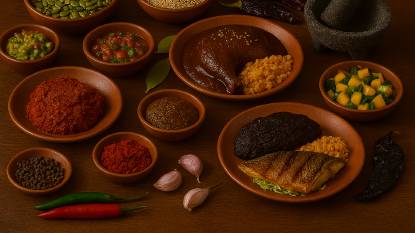


Beyond the vibrant salsas and complex moles lies the quiet, foundational genius of Mexican cuisine: the pasta or paste. These concentrated pastes, born from the ancient metate (grinding stone) and now the modern blender, are the DNA of countless dishes. They are not merely sauces but transformative flavor platforms—dry marinades, stew bases, and cooking mediums that carry the deep, roasted essence of Mexico’s seeds, nuts, and chiles. As culinary scholar Diana Kennedy asserted, “These pastes are the true soul of a dish, applied before cooking to permeate every fiber.” This exploration delves into the art and science of Mexico’s essential pastes, from the Yucatán’s recados to the universal adobo.
The Alchemy of Seeds & Nuts: Why Pastes Work
The use of ground seeds and nuts is a culinary cornerstone with roots in both pre-Hispanic and Spanish traditions. Indigenous cultures perfected the toasting and grinding of pumpkin seeds (pepitas) and chiles for pipians, while Spanish colonizers introduced almonds, sesame, and spices like cinnamon and clove. Combined, they created a new, layered flavor profile.
Scientifically, this process is a masterpiece of flavor extraction:
- Toasting (Tostar): Dry-roasting seeds, nuts, and dried chiles over a comal (clay griddle) triggers the Maillard reaction, developing deep, nutty, and complex aromas while reducing bitterness.
- Grinding (Moler): Pulverizing the toasted ingredients breaks down cell walls, releasing volatile oils and creating a larger surface area, allowing flavors to merge and infuse into meats and broths more effectively than whole spices ever could.
- Hydrating & Cooking: Mixing the paste with a liquid medium—sour orange juice, vinegar, or stock—and then cooking it further marries the flavors and stabilizes them.
This trinity of techniques transforms simple ingredients into a potent, shelf-stable flavor bomb. 💥
The Pantheon of Pastes: A Detailed Guide
1. Recado Rojo & The Yucatecan Recado Family
Hailing from the Yucatán Peninsula, recados are the region’s signature, often sold in vibrantly colored blocks at local markets. They are the indispensable seasoning for the Maya-derived cuisine of the southeast.
- Recado Rojo (Achiote Paste): The most famous. Its stunning crimson color comes from annatto seeds (achiote), which impart a subtle earthy, slightly peppery flavor but little heat. A traditional brick includes ground annatto, oregano, cumin, black pepper, allspice, clove, cinnamon, garlic, and salt. Chef Luis Briceno of La Chaya Maya in Mérida explains, “The block is just the beginning. We dissolve it in naranja agria (bitter Seville orange juice) to make the marinade for cochinita pibil. The acid tenderizes the meat while the spices perfume it through and through.”
- Other Key Recados: The family is diverse.
- Recado Negro: A dramatic, char-black paste made from burnt chiles (usually chilhuacle or pasilla) with allspice and vinegar, used for pavo en relleno negro (turkey in black stuffing).
- Recado de Bistec: A simpler blend for grilling steak.
- Recado para Escabeche: For pickling onions and meats.
Fact: Annatto (achiote) contains the carotenoid pigment bixin, which is not only a powerful natural dye but also a studied antioxidant.
2. Adobo: The All-Purpose Marinade Master
While the term adobo (from the Spanish adobar, “to marinate”) is used across the Spanish-speaking world, the Mexican version is distinctly chile-centric. Unlike the Yucatecan recados, adobo is typically a ready-to-use wet paste or sauce.
- Composition: The base is rehydrated dried chiles (commonly ancho, guajillo, and/or pasilla), blended with garlic, vinegar, Mexican oregano, cumin, and sometimes tomatoes or tomatillos. The vinegar acts as a preservative and tenderizer.
- Uses: It is the classic marinade for tacos al pastor (before the Lebanese influence added vertical spits), carnitas, and chorizos. It can also be thinned into a stewing sauce for tinga or carne enchilada.
- Chef’s Insight: At El Huequito in Mexico City, famed for its pastor, the exact adobo recipe is a closely guarded secret. “The balance of chile sweetness, acid, and spice is what makes the meat irresistible,” says the head trompo master. The adobo is painted onto the vertical spit of pork in layers, caramelizing as it turns.
3. Pipián: The Ancient Seed Paste
Pipián is one of Mexico’s oldest dishes, a pre-Columbian precursor to mole. Its heart is the roasted pepita (hulled pumpkin seed), which gives it a distinctive, rich, and slightly grassy flavor.
There are two principal branches, defined by color and ingredients:
A. Pipián Verde (Green):
- Base: Roasted pumpkin seeds, tomatillos, serrano or jalapeño peppers, cilantro, hoja santa (if available), and lettuce or chard for verdancy.
- Flavor: Bright, herbal, and nutty with a fresh heat.
- Iconic Dish: Pollo en Pipián Verde. At Fonda Fina in San Miguel de Allende, Chef Donnie Masterton serves a celebrated version where the pipián is silky and vibrantly green, coating succulent chicken.
B. Pipián Rojo (Red):
- Base: Roasted pumpkin seeds combined with dried red chiles (ancho, guajillo), tomatoes, and sesame seeds.
- Flavor: Deeper, earthier, and more rounded than its green counterpart.
- Iconic Dish: Often served with duck or pork.
Cultural Note: Pipián is considered a “platillo de fiesta” (festive dish), commonly served at weddings and large celebrations, symbolizing abundance.
4. Mole Paste: The Apex of Complexity
While often finished as a sauce, mole begins its life as a densely concentrated paste. The most famous, Mole Poblano, can contain over 20 ingredients. Key nut and seed components include almonds, peanuts, sesame seeds, and pumpkin seeds. These are toasted individually, then ground and integrated with chiles, spices, chocolate, and bread or tortilla for thickening.
- The Art of the Blend: In Oaxaca, the “Land of Seven Moles,” this paste-making is sacred. Chef Alejandro Ruíz of Casa Oaxaca states, “Toasting each ingredient to its perfect point is everything. A sesame seed toasted one second too long can bitter the entire batch.” The resulting paste can be stored and reconstituted with broth for special occasions.
Nutritional Spotlight: The Power of Paste Ingredients
Pastes are not just flavor agents; they are nutrient-dense. Here’s a breakdown of the core components:
| Ingredient (1 oz / 28g) | Primary Nutrients | Health & Culinary Function |
|---|---|---|
| Pumpkin Seeds (Pepitas) | Magnesium, Zinc, Iron, Healthy Fats, Protein | Provides body, thickness, and a nutty base for pipián. Rich in antioxidants. 🎃 |
| Annatto Seeds (Achiote) | Carotenoids (Bixin), Calcium, Iron | Imparts vibrant color and earthy flavor; antioxidant properties. |
| Sesame Seeds (Ajonjolí) | Copper, Manganese, Calcium, Lignans | Adds a subtle crunch and toasted aroma to moles and recados. |
| Almonds | Vitamin E, Magnesium, Healthy Fats | Contributes richness, body, and a smooth mouthfeel to complex moles. |
| Dried Ancho Chile | Vitamin A, Capsaicin, Fiber | Provides foundational sweet-pepper flavor and deep red color to adobos. |
>Source: Data compiled from USDA National Nutrient Database and Mexican culinary texts.>
From Market to Mesa: A Recipe for Adobo de Chile Ancho
Yield: Makes about 1.5 cups of paste
Ingredients:
- 4 large ancho chiles, stems and seeds removed
- 3 cloves garlic, peeled
- 1/2 tsp cumin seeds
- 1/2 tsp dried Mexican oregano
- 1/4 cup apple cider vinegar
- 2 tbsp tomato paste
- 1 tsp brown sugar or piloncillo
- 1 tsp salt
- Water, as needed
Method:
- Toast & Rehydrate: Heat a comal or dry skillet over medium heat. Toast the ancho chiles for about 30 seconds per side until fragrant and pliable. Be careful not to burn. Place toasted chiles in a bowl and cover with hot water. Soak for 15-20 minutes until very soft.
- Toast Aromatics: In the same skillet, toast the garlic cloves until slightly blackened in spots. Add the cumin seeds and oregano and toast for 30 seconds until fragrant.
- Blend: Drain the chiles, reserving 1/2 cup of the soaking liquid. In a blender, combine the softened chiles, toasted garlic, cumin, oregano, vinegar, tomato paste, brown sugar, and salt. Blend on high, adding the reserved soaking water a little at a time, until a completely smooth, thick paste forms.
- Store & Use: Store in an airtight jar in the refrigerator for up to 2 weeks, or freeze for 3 months. To use as a marinade, coat 2 lbs of pork shoulder or chicken thighs thoroughly and let marinate for at least 4 hours, preferably overnight, before slow-roasting or braising.
The Modern Paste: Innovation and Preservation
Contemporary Mexican chefs are both preserving and innovating with these pastes. At Quintonil in Mexico City, Chef Jorge Vallejo might create a deconstructed pipián where the pumpkin seed paste appears as a modernist “soil” alongside heritage pork. Meanwhile, small-batch producers like Amaranta in Oaxaca are reviving ancient recado recipes for home cooks, emphasizing organic, heirloom chiles and spices.
Mexican cooks frequently use chile pastes—made from dried chiles such as ancho, guajillo, pasilla, or chipotle—to season everyday staples like beans and greens. These pastes are typically prepared by toasting the chiles, rehydrating them, and grinding them with garlic, onion, and spices, a technique documented across regional cuisines from Oaxaca to central Mexico. A spoonful of chile paste is commonly added to simmering beans to deepen color and flavor, or stirred into quelites (wild edible greens such as quintonil or huauzontle), a practice noted in traditional home cooking and regional markets. The paste acts as a concentrated seasoning base, allowing cooks to build complexity quickly without preparing a full sauce.
For meats and fish, chile pastes form the backbone of marinades, rubs, and slow‑cooked dishes throughout the country. In states like Yucatán, achiote paste—made from annatto seeds ground with spices and sour orange juice—is used to marinate pork for cochinita pibil, a preparation with well‑documented pre‑Hispanic and colonial roots. In coastal regions, cooks often use guajillo or ancho pastes to season fish for dishes such as pescado adobado, where the paste is thinned into an adobo and brushed onto fillets before grilling or pan‑searing. These uses are consistent across Mexican culinary literature: pastes provide concentrated flavor, preserve ingredients, and serve as a versatile foundation for both land and sea preparations.
Mexican pastes and salsas share a common foundation: both rely on chiles that are toasted, rehydrated, and ground to release their full aroma. A paste is typically thicker and more concentrated, often made from dried chiles such as guajillo, ancho, or pasilla, and used as a base for cooking. Salsas, by contrast, are usually thinned with water, broth, or tomatoes and can be made from either fresh or dried chiles. In many regions, a single chile paste—once diluted or blended with tomatillos, garlic, or herbs—becomes the house salsa served at the table. This continuity between paste and salsa is a defining feature of Mexican cooking: one technique, many expressions, all anchored in the flavor of chiles.
The paste, in its humble block or blended form, remains a testament to Mexican culinary wisdom: depth of flavor is built from the ground up, layer by toasted layer. It is a portable, potent piece of heritage that continues to define the nation’s palate, one transformed dish at a time.
References & Further Reading
Sponsored links
- Kennedy, Diana. The Essential Cuisines of Mexico. Clarkson Potter, 2000.
- Muñoz Zurita, Ricardo. Diccionario Enciclopédico de la Gastronomía Mexicana. Larousse, 2012.
- “The Recados of Yucatán” in Mexico Desconocido Magazine, Issue 145.
- Zizumbo-Villarreal, D., et al. (2012). “The Archaic Diet in Mesoamerica: Incentive for Milpa Development and Species Domestication.” Economic Botany.
- Presilla, Maricel. Gran Cocina Latina: The Food of Latin America. W.W. Norton & Company, 2012.
Mexican Rice with Achiote Paste [Video]
Featured Articles
Explore rich culinary stories, exclusive chef interviews, and expert insights from kitchens around the world. Discover cooking techniques, ingredient spotlights, and behind-the-scenes looks at the tools that shape global cuisine.

Georges Auguste Escoffier: Visionary Chef Who Revolutionized French Cuisine and Modern Cooking
Discover the life and legacy of Georges Auguste Escoffier, the legendary chef who transformed French cuisine and laid the foundation for modern culinary arts. This comprehensive historical profile …
How to Use a Knife, Fork, and Spoon
Master the basics of Western table etiquette with this guide to using a knife, fork, and spoon. Learn practical tips, cultural context, and the subtle rules that shape how we dine.
The History of Chocolate
Trace the fascinating history of chocolate—from its ancient origins with the Olmecs and Maya to its transformation into a global indulgence. Explore how cacao evolved from sacred ceremonial drink to …
Georges Auguste Escoffier: Visionary Chef Who Revolutionized French Cuisine and Modern Cooking
Discover the life and legacy of Georges Auguste Escoffier, the legendary chef who …
How to Use a Knife, Fork, and Spoon
Master the basics of Western table etiquette with this guide to using a knife, fork, and …
The History of Chocolate
Trace the fascinating history of chocolate—from its ancient origins with the Olmecs and …