Beans and Greens of Mexico: The Essential Guide

By: Simon
December 20, 2025 | Updated: February 17, 2026
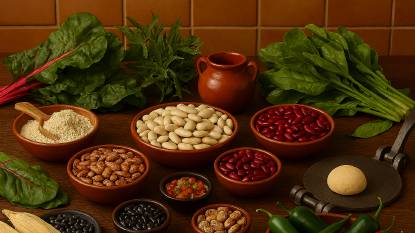


In the vast and varied tapestry of Mexican cuisine, two elements form the unshakeable foundation: frijoles (beans) and a stunning array of native vegetables and greens. Far more than mere sides, these ingredients are the soul of the everyday meal, carrying centuries of agricultural wisdom and regional identity.
The Heartbeat of the Home: Frijoles
Beans are not just food in Mexico; they are a cultural staple. Grown traditionally in the milpa system alongside corn and squash (the “Three Sisters”), they complete a nutritional symbiosis. When eaten together, corn and beans provide a complete protein profile, a cornerstone of Mesoamerican diets for millennia. Whether served with meat or fish, or on their own, Beans are a familiar Mexican staple.
Regional Bean Preferences:
| Region | Preferred Bean | Key Dish Example |
|---|---|---|
| Yucatán & Southeast | Black Beans (Frijoles Negros) | Frijoles Colados (strained, silky beans) |
| Northern States | Pinto Beans (Frijoles Bayos) | Frijoles Charros (cowboy-style beans) |
| Central Mexico | Peruano/Canary Beans (Frijoles Peruanos) | Frijoles de la Olla (pot beans) |
| Nationwide | Kidney Beans (Frijoles Colorados) | Used in salads & stews |
Chef’s Tip: Renowned chef Enrique Olvera of Pujol (Mexico City) emphasizes the importance of patience: “Do not salt your beans at the beginning of cooking. Add salt only once they are tender. The old tale that salt toughens skins is debated, but adding aromatics like epazote or avocado leaf from the start is non-negotiable for depth of flavor.” 🌿
The Verdant Bounty: Beyond Simple “Greens”
Mexico’s vegetable repertoire is a celebration of unique textures and flavors, often pre-Columbian in origin.
- Nopales: The paddles of the prickly pear cactus are a national treasure. Rich in fiber, vitamins, and minerals, they have a tart, green bean-like flavor and a mucilaginous texture that thickens stews. They are often grilled (asados) or scrambled with eggs.
- Verdolagas: Purslane, a succulent green often considered a weed elsewhere, is a nutritional powerhouse—high in omega-3 fatty acids and antioxidants. It’s essential to the classic Guiso de Verdolagas con Cerdo (pork and purslane stew).
- Hoja Santa: The large, anise-scented “sacred leaf” is used to wrap tamales and flavor stews in Veracruz and Oaxaca.
- Chayote: A mild, versatile squash, eaten raw in salads or cooked in guisados.
- Jícama & Radishes: Prized for their crisp, juicy crunch, often served fresh with lime, chili powder, and salt as a botana (snack).
From Market to Mesa: A Chef’s Perspective
In Oaxaca, Chef Alejandro Ruíz of Casa Oaxaca champions local produce. His restaurant features a stunning Tlayuda de Hongos Silvestres, showcasing the region’s wild mushrooms. “Our greens and vegetables are not accompaniments,” he notes. “They are the protagonists that tell the story of our land and seasons.”
In the north, at Monterrey’s El Gran Pastor, the humble pinto bean is transformed into Frijoles con Veneno (“beans with poison”), a rich casserole of beans topped with melted cheese and chorizo.
Across Mexico, cooks rely on concentrated chile pastes as the backbone of everyday dishes, from adobos and moles to table salsas. Dried chiles such as ancho, guajillo, and pasilla are toasted, soaked, and ground—often with garlic, spices, and vinegar—into dense, deeply flavored pastes that can be thinned into sauces or rubbed directly onto meats and vegetables. In regions like Oaxaca and the Yucatán Peninsula, these pastes are prepared in advance and kept on hand, turning a simple pot of beans, a piece of fish, or a handful of seasonal vegetables into something layered, complex, and unmistakably Mexican.
Nutritional Powerhouses: A Comparative Analysis 🥬📊
The health benefits of Mexico’s staple beans and greens are as impressive as their flavors. These ingredients are cornerstones of a diet celebrated for its balance and wholesomeness. Below is a detailed nutritional comparison of common varieties per 100-gram cooked serving, highlighting their unique contributions to a healthy diet.
Nutritional Profile of Key Mexican Beans & Greens
| Ingredient (100g cooked) | Calories | Protein (g) | Fiber (g) | Key Vitamins & Minerals | Notable Health Benefit |
|---|---|---|---|---|---|
| Black Beans (Frijoles Negros) | 132 | 8.9 | 8.7 | Folate (64% DV), Iron (20% DV), Magnesium (29% DV) | Excellent for heart health & stabilizing blood sugar. 🌱 |
| Pinto Beans (Frijoles Bayos) | 143 | 9.0 | 9.0 | Folate (74% DV), Manganese (39% DV), Thiamine (28% DV) | Supports digestive health and provides sustained energy. |
| Nopales (Cactus Paddles) | 16 | 1.3 | 2.2 | Vitamin C (23% DV), Magnesium (24% DV), Calcium (21% DV) | Contains antioxidants and compounds that may help lower blood glucose. 🌵 |
| Verdolagas (Purslane) | 20 | 2.0 | 2.1 | Vitamin A (26% DV), Vitamin C (35% DV), Omega-3 Fatty Acids (Alpha-Linolenic Acid) | One of the richest plant sources of omega-3s; anti-inflammatory. |
| Chayote Squash | 24 | 0.8 | 1.7 | Vitamin C (26% DV), Folate (23% DV), Vitamin K (10% DV) | Very low in calories; promotes hydration and healthy skin. |
| Epazote (Herb, fresh) | ~32 | 0.3 | ~7.0 | Vitamin A (57% DV), Vitamin B9, Calcium, Manganese | Traditionally used as a carminative to reduce gas from beans. |
(DV = Percent Daily Value based on a 2,000-calorie diet. Data sourced from USDA FoodData Central and Mexican nutritional studies.)
The Synergistic Health Impact
The true genius of Mexican cuisine lies in the synergistic pairing of these ingredients. For example:
- Beans + Corn: As noted, this combination creates a complete protein, vital for muscle repair and growth.
- Beans + Epazote: This is not just a flavor pairing. Epazote contains compounds that help break down the complex sugars in beans that cause digestive discomfort, making the meal more digestible and nutritious.
- Greens + Citrus: The high vitamin C content in lime juice or salsa eaten with iron-rich greens like verdolagas or beans significantly enhances the body’s absorption of non-heme iron, combating anemia.
As Chef Patricia Quintana famously emphasized, “Our traditional mercado is a pharmacy. The frijoles give us strength, the nopales cleanse us, and the yerbas (herbs) heal us.” This table underscores how the foundational elements of Mexican cooking are intrinsically linked to holistic well-being, offering a powerful combination of macronutrients, vitamins, minerals, and unique phytochemicals.
A Nutritious Profile & Simple Recipe
Nutritional Spotlight: A standard 1-cup serving of cooked black beans provides approximately 15g of protein, 15g of fiber, 20% of the Daily Value for iron, and is naturally low in fat. Combined with nopales (high in vitamins A, C, K, and calcium), it forms a profoundly healthy, satisfying base for any meal.
Recipe: Quick Frijoles Refritos con Nopales (Refried Beans with Cactus)
Serves 4
Ingredients:
- 3 cups cooked pinto or black beans, with their broth
- 2 Tbsp lard or avocado oil
- 1/2 white onion, finely chopped
- 1 cup cooked nopales, diced (available jarred or fresh, boiled)
- 1 serrano chili, minced (optional)
- Salt to taste
- Queso fresco and cilantro to garnish
Method:
- Heat the fat in a heavy skillet over medium. Fry the onion until soft.
- Add the beans with about 1/2 cup of their broth. Mash thoroughly with a bean masher or the back of a spoon.
- Stir in the nopales and minced chili. Cook, stirring, until the mixture thickens to your preference. Season with salt.
- Serve hot, garnished with crumbled queso fresco and chopped cilantro. Perfect with warm corn tortillas. 🍽️
From the ancient milpa to the modern innovative kitchen, beans and greens remain the vibrant, nutritious, and delicious pillars of Mexican culinary tradition. They are a testament to a culture that has always known how to eat from the earth, with profound respect and creativity.
References & Further Reading
- Kennedy, D. (1986). The Cuisines of Mexico. Harper & Row.
- Instituto Nacional de Estadística y Geografía (INEGI). (2020). Estadísticas de la Producción Agrícola.
- USDA FoodData Central. (2022). Beans, black, mature seeds, cooked.
- Olvera, E. (2015). Mexico from the Inside Out. Phaidon Press.
Mexican Greens and Beans Taco Recipe
Featured Articles
Explore rich culinary stories, exclusive chef interviews, and expert insights from kitchens around the world. Discover cooking techniques, ingredient spotlights, and behind-the-scenes looks at the tools that shape global cuisine.
Georges Auguste Escoffier: Visionary Chef Who Revolutionized French Cuisine and Modern Cooking
Discover the life and legacy of Georges Auguste Escoffier, the legendary chef who transformed French cuisine and laid the foundation for modern culinary arts. This comprehensive historical profile …
How to Use a Knife, Fork, and Spoon
Master the basics of Western table etiquette with this guide to using a knife, fork, and spoon. Learn practical tips, cultural context, and the subtle rules that shape how we dine.

The History of Chocolate
Trace the fascinating history of chocolate—from its ancient origins with the Olmecs and Maya to its transformation into a global indulgence. Explore how cacao evolved from sacred ceremonial drink to …
Georges Auguste Escoffier: Visionary Chef Who Revolutionized French Cuisine and Modern Cooking
Discover the life and legacy of Georges Auguste Escoffier, the legendary chef who …
How to Use a Knife, Fork, and Spoon
Master the basics of Western table etiquette with this guide to using a knife, fork, and …
The History of Chocolate
Trace the fascinating history of chocolate—from its ancient origins with the Olmecs and …