Carnes y Pescados: The Savory Soul of Mexican Cuisine

By: Simon
December 21, 2025 | Updated: February 17, 2026
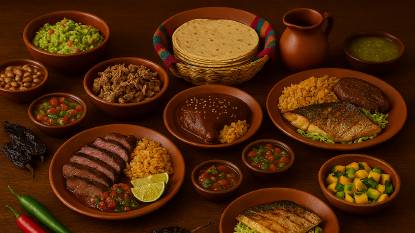


In the vibrant mosaic of Mexican gastronomy, the role of meat and fish is foundational, complex, and intimately tied to the land, history, and soul of its people. To say Mexican cuisine is “meat-centered” is to tell only part of a rich story. It is a cuisine of profound resourcefulness, where geography dictates the protein, and centuries of technique transform every part of the animal into dishes of deep flavor and cultural significance. From the high-altitude barbacoa pits to the cevicherías of the coast, this is a journey through the savory heart of Mexico. 🇲🇽
Part I: The Terrestrial Kingdom – A Hierarchy of Meat
The Porcine Sovereign: Why Pork is King 🐖👑
The Spanish conquest introduced the pig (Sus scrofa domesticus), an animal that would revolutionize Mexican foodways. Its rapid reproduction, efficient feed conversion, and unparalleled versatility led to its rapid entrenchment. As historian Jeffrey M. Pilcher notes in ¡Que vivan los tamales!, the pig became a “colonial success story,” seamlessly integrating into indigenous feasts and daily life, becoming an intergral part of the Mexican main meal.
Pork’s dominion is absolute, celebrated in festivals like Carnaval and everyday meals. Its reign is built on a “nose-to-tail” philosophy that is both economical and deeply flavorful.
- The Prime Cuts: Lomo (loin) is roasted with spices; costillas (ribs) are slathered in adobo; and pierna (leg) is slow-cooked for carnitas.
- The Art of Carnitas: Hailing from Michoacán, this is pork’s ultimate expression. Large cuts are confited in their own lard in copper pots for hours until tender inside and crisped outside. Chef Gabriela Cámara of Contramar (Mexico City) notes, “The magic of carnitas is in the texture spectrum—from the soft, shredded meat to the crispy costilla.”
- The Sacred Feast: Cochinita Pibil: The Yucatán Peninsula’s flagship dish. A whole suckling pig is marinated in achiote paste and sour orange juice, wrapped in banana leaves, and slow-roasted in a pit oven (píib). The result is impossibly tender, aromatic meat, traditionally served in tacos with pickled red onion.
- The Offal Symphony: Nothing is wasted.
- Chicharrón: Fried pork skin or belly, a ubiquitous snack that can be chewy or puffy.
- Chorizo: Spiced sausage, fresh or cured, used to flavor everything from eggs to beans and greens.
- Moronga/Morcilla: Blood sausage, often seasoned with mint and pine nuts.
- Tacos de Lengua (Tongue): Braised until buttery-soft, a street food delicacy.
- Menudo & Pancita: Tripe soups, the legendary hangover cures, rich with hominy and a fiery broth.
The Avian Aristocracy: Fowl in Flight
Pre-Hispanic Mexico was ruled by the turkey (guajolote) and the duck. Today, poultry remains a cornerstone, prized for its accessibility.
- Turkey (Guajolote): The original festive bird. Its rich, dark meat is essential for mole poblano and mole negro oaxaqueño. The Mole Poblano served at Pujol by Chef Enrique Olvera is a seven-day process that honors the bird’s historic status.
- Chicken (Pollo): The everyday staple. Pollo asado (grilled), pollo en salsa verde (in tomatillo sauce), and tinga de pollo (shredded in a chipotle-tomato sauce) are national comfort foods.
- Duck (Pato): In central Mexico, it’s often served in a rich mole de ciruela (plum mole) or confited.
The Ruminants of the Range: Beef, Goat, and Sheep
Geography is destiny when it comes to hooved meat.
- The Northern Cattle Empire: The vast, arid north is beef country. Carne asada is a social institution—thinly sliced skirt or flank steak, grilled quickly over mesquite, and served with flour tortillas, charro beans, and salsas. Renowned Chef Javier Plascencia’s restaurants in Tijuana, like Misión 19, elevate Baja-style beef with modern techniques.
- The Goat of the Center & South: In the rugged, dry central highlands, goats (cabrito) and sheep (borrego) thrive. Barbacoa de borrego (slow-steamed lamb) from Hidalgo is legendary, often cooked in maguey leaves in underground pits.
- Birria: The stew that conquered the world. Originally made with goat in Jalisco, this spicy, tangy, consommé-based stew is now also made with beef and is a weekend ritual.
Nutritional Profile: Common Mexican Meats (Per 100g cooked)
| Meat | Calories | Protein (g) | Fat (g) | Key Nutrient |
|---|---|---|---|---|
| Pork Carnitas | ~248 | 23 | 16 | High in Thiamin (B1), Selenium |
| Grilled Skirt Steak | ~217 | 26 | 12 | Rich in Iron, Zinc, Vitamin B12 |
| Braised Goat | ~143 | 27 | 3 | Leaner than beef, high in Protein |
| Roasted Chicken | ~165 | 25 | 6.6 | Excellent source of Niacin (B3) |
| Turkey (dark meat) | ~175 | 28 | 6 | High in Zinc and Selenium |
Part II: The Bounty of the Waters – Mexico’s Coastal Larder
With over 9,000 km of coastline, Mexico’s relationship with seafood is ancient and abundant. From the Sea of Cortez (“The World’s Aquarium”) to the Caribbean, each coast has its own lexicon of flavors.
The Crustacean & Mollusk Bounty 🦐🦀
- Shrimp (Camarón): Eaten fresh in aguachile (lime-cured with chili) or al mojo de ajo (garlic butter). Dried shrimp are a flavor powerhouse for sauces and rice dishes.
- Octopus (Pulpo): Tenderized and grilled (al carbón) or cooked in its own ink.
- Mussels & Oysters: Often served a la vinagreta or raw with lime and hot sauce.
The Fish of Distinction
- Snapper (Huachinango): The classic fish for veracruzana-style, with tomatoes, capers, and olives.
- Sea Bass (Robalo): Favored for ceviches and grilling.
- Swordfish & Marlin: Often diced for tacos or empanadas.
- Cod (Bacalao): A Spanish import central to festive Bacalao a la Vizcaína during Christmas.
Signature Coastal Dishes:**
- Ceviche: Not a single dish but a family. From the simple Sonoran style (just lime, cilantro, onion) to the complex ceviche negro of Guerrero. At Enrique’s in Oaxaca’s Puerto Escondido, the mixed ceviche in a guajillo broth is legendary.
- Pescado a la Talla (Acapulco/Puerto Vallarta): A whole fish, butterflied and painted—one side with a smoky red chili paste, the other with a creamy garlic-herb sauce—then grilled.
- Camarones a la Diabla: “Deviled” shrimp in a fiercely hot, deep-red chili sauce.
Part III: The Exotic & the Entomological: Unusual Proteins
Beyond the familiar lies a world of traditional proteins, often tied to pre-Hispanic sustenance and local ecosystems.
- Iguana & Armadillo: Consumed in rural areas of the south, often in stews. Iguana eggs are also considered a delicacy.
- Insects (Entomofagia): A highly sustainable and flavorful protein source.
- Chapulines: Toasted grasshoppers from Oaxaca, seasoned with garlic, lime, and chili. They are crunchy, tangy, and savory, often eaten as a snack or topping for tlayudas. Markets like 20 de Noviembre in Oaxaca City are famous for them.
- Escamoles: “Insect caviar.” The larvae of the black ant, harvested from agave roots. They have a buttery, nutty flavor and are sautéed with butter and epazote, often served in tacos as a luxury item.
- Gusanos de Maguey: The caterpillars that live in agave plants, either fried crisp or cured in mezcal (where they are found at the bottom of the bottle).
Technique & Philosophy: Why Boiling Comes First
The article’s observation that meats are “boiled even before they are roasted” touches on a core technique: blanquear or sancochar. This initial poaching or boiling serves multiple purposes:
- Stock Creation: It generates the foundational broths (caldos) for the vast soup repertoire.
- Purity & Texture: It cleanses the meat, removes impurities, and can help tenderize tougher cuts before they are fried or roasted for deeper flavor (as in tinga or carnitas).
- Food Safety: A crucial step for offal, ensuring it is fully cooked before further preparation.
This technique exemplifies the Mexican culinary ethos: maximum flavor, zero waste. The “lovely stocks” are as vital as the meat itself.
A Recipe: Tacos de Carnitas Estilo Michoacán
Serves 6-8
Ingredients:
- 4 lbs pork shoulder (pierna), cut into 3-inch chunks
- 1 lb pork belly, cut into chunks
- 1 lb pork skin (optional, for chicharrón)
- 1 orange, halved
- 1/2 white onion
- 5 cloves garlic
- 2 bay leaves
- 1 tbsp dried oregano (preferably Mexican)
- 2 tsp cumin seeds
- Lard or vegetable oil, if needed
- Salt
- To serve: Corn tortillas, salsa verde, chopped onion, cilantro, lime wedges.
Method:
- Place all meat in a large, heavy pot (a traditional copper cazo is ideal). Add enough water to barely cover. Squeeze in the orange juice and add the spent halves, onion, garlic, bay leaves, oregano, cumin, and 1 tbsp salt.
- Bring to a boil, then reduce to a vigorous simmer. Cook uncovered for about 2 hours, until the water has evaporated and the meat begins to fry in its own rendered fat.
- Continue cooking, stirring occasionally, for another 45-60 minutes until the meat is tender and the edges are crispy and golden brown. If the meat is lean, you may need to add some lard.
- Remove large chunks and shred or chop roughly. Serve immediately on warm tortillas with garnishes.
References & Further Reading
- Pilcher, J. M. (1998). ¡Que vivan los tamles! Food and the Making of Mexican Identity. University of New Mexico Press.
- Kennedy, D. (1989). The Tortilla Chronicles. Harper & Row.
- Muñoz Zurita, R. (2012). Diccionario Enciclopédico de la Gastronomía Mexicana. Larousse.
- Instituto Nacional de Estadística y Geografía (INEGI). (2023). Anuario Estadístico de la Producción Ganadera.
From the royal pork to the humble grasshopper, Mexican meat and fish cookery is a testament to adaptability, respect for ingredients, and an unbroken chain of culinary knowledge that continues to define one of the world’s most vibrant cuisines.
Featured Articles
Explore rich culinary stories, exclusive chef interviews, and expert insights from kitchens around the world. Discover cooking techniques, ingredient spotlights, and behind-the-scenes looks at the tools that shape global cuisine.

Georges Auguste Escoffier: Visionary Chef Who Revolutionized French Cuisine and Modern Cooking
Discover the life and legacy of Georges Auguste Escoffier, the legendary chef who transformed French cuisine and laid the foundation for modern culinary arts. This comprehensive historical profile …
How to Use a Knife, Fork, and Spoon
Master the basics of Western table etiquette with this guide to using a knife, fork, and spoon. Learn practical tips, cultural context, and the subtle rules that shape how we dine.

The History of Chocolate
Trace the fascinating history of chocolate—from its ancient origins with the Olmecs and Maya to its transformation into a global indulgence. Explore how cacao evolved from sacred ceremonial drink to …
Georges Auguste Escoffier: Visionary Chef Who Revolutionized French Cuisine and Modern Cooking
Discover the life and legacy of Georges Auguste Escoffier, the legendary chef who …
How to Use a Knife, Fork, and Spoon
Master the basics of Western table etiquette with this guide to using a knife, fork, and …
The History of Chocolate
Trace the fascinating history of chocolate—from its ancient origins with the Olmecs and …