Mexican Cuisine
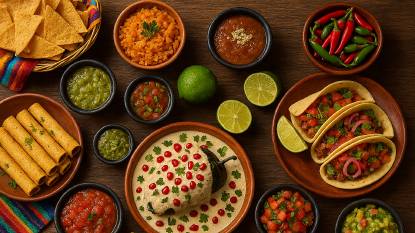

A giant among it’s peers in Global food culture, the story of Mexican food is not merely a culinary chronology; it is a vibrant, often turbulent, tapestry woven from the deep knowledge of its original peoples and the forceful imposition of a foreign world. To understand a Mexican plate is to taste millennia of history, innovation, adaptation, and resilience.
The Foundational Civilizations: Architects of a Culinary World
Long before European contact, the land that is now Mexico was a cradle of sophisticated civilizations whose agricultural and botanical genius shaped global foodways. To label the Aztecs, Mayans, Toltecs, and Zapotecs merely as “Indians” is to underestimate their monumental role as the original master chefs and agronomists of the Americas.
Their legacy is not stored in ruins alone, but in the world’s pantries. Through patient observation and selective breeding, they performed what food historian Rachel Laudan calls “the single most impressive feat of domestication in history”: the development of maize (corn) from a wild grass called teosinte. This single crop became the spiritual and physical heart of Mesoamerican life, represented by the divine figure of Centeotl. But their genius did not stop there. They gifted the world chocolate (xocolātl), a bitter, frothy drink revered as the food of the gods; the versatile tomato (xitomatl); the myriad of Mexican beans, greens and squash that would form the nutritional trinity of the milpa farming system; and the incendiary magic of chiles, cultivating dozens of varieties for both flavor and preservation.
These were not simple farmers, but expert engineers who built complex irrigation systems like the Mayan bajos and chultunes, and botanists who curated vast botanical gardens, such as those of Nezahualcoyotl in Texcoco. Their cuisine, documented in codices like the Florentine Codex, was elaborate, featuring tamales, stews, sauces (the true ancestors of mole), and a rich variety of insects, amphibians, and game.
The Columbian Catalyst: Collision, Carnage, and Culinary Fusion
The year 1519 marked a cataclysm. The arrival of Hernán Cortés and his cohort unleashed a wave of violence, disease, and social destruction that decimated the indigenous population. Yet, in a cruel and complex paradox, this collision also triggered one of history’s most significant culinary exchanges—the Columbian Exchange.
The Spaniards arrived with ingredients that were alien to the Mesoamerican diet: wheat for bread and pastries, dairy products (milk, cheese, cream), meats from domesticated pigs, cattle, and chickens, rice, citrus fruits, garlic, onions, and vinegar. They also brought a zealous Catholic faith that would dictate feast days and fasting periods, reshaping the culinary calendar.
The fusion was not always permitted to be organic. In a stark example of economic protectionism, the Spanish Crown, seeking to protect its lucrative olive oil and wine monopolies, explicitly forbade the cultivation of olives and grapes in New Spain. This decree, lasting centuries, forced Mexican cuisine to innovate with local fats like avocado and pumpkin seed oil, and to develop its unique spirits, most notably pulque and, later, tequila and mezcal. It is one of history’s great “what ifs”—imagine the olive groves of Oaxaca or the vineyards of the Bajío thriving since the 16th century.
The result of this forced marriage was mestizaje culinario (culinary mestizaje). Indigenous ingredients met Old World techniques and staples. The metate (grinding stone) was used to mash almonds and spices for Spanish-inspired romesco sauce, which evolved into the quintessential Mexican mole poblano. The indigenous tamal was stuffed with pork lard. Wheat flour was used to create the northern burrito and flauta. This was not a simple blending, but a creative, often painful, birth of something entirely new.
The Rhythm of the Day: A Five-Act Meal
Modern Mexican cuisine is a living practice of this history, best observed in the traditional structure of the daily meals, a rhythm that organizes time and social life. While urban modernity has eroded this full schedule for many, its framework remains the cultural ideal.
-
El Desayuno Ligero (The Light Breakfast): The day does not begin with a feast, but with a gentle awakening. Before dawn or early work, a simple café de olla (coffee brewed with cinnamon and piloncillo sugar) or a strong cup of coffee with steamed milk is taken, perhaps with a sweet pan dulce like a concha. This is not almuerzo; it is fuel for the initial hours of labor.
-
El Almuerzo (The Real Breakfast): Around 10 or 11 a.m., after the first shift of work, comes the first substantial meal. This is a savory, hearty repast meant to sustain. It might feature huevos rancheros, chilaquiles swimming in green or red salsa, or enfrijoladas. It is a meal that confidently deploys chiles, beans, tortillas, and eggs, often accompanied by fresh juice.
-
La Comida Corrida (The Main Meal): The centerpiece of the day, taken between 2 and 4 p.m. This is the modern descendant of the colonial-era main dinner. It is a multi-course affair: a soup (sopa de fideo or caldo tlalpeño), a dry soup or pasta, a main course (guisado) like tinga de pollo or pescado a la veracruzana, accompanied by beans, rice, and tortillas, followed by a simple dessert (postre) and coffee. The meal is social, familial, and followed by the sacred siesta, a necessary retreat for digestion and respite from the midday sun. Work resumes, if at all, much later.
-
La Merienda (The Afternoon Snack): At dusk, around 6 or 7 p.m., a small bite bridges the gap. This is the equivalent of British tea or an Italian aperitivo. It might be a tamal, an atole (a warm, masa-based drink), a sweet pastry, or simply coffee and conversation.
-
La Cena (Supper): A light, often optional, final meal. If eaten, it is something modest: leftovers from la comida, a simple soup like sopa de tortilla, or a few tacos from the street vendor. Its modesty underscores the primacy of the afternoon comida. However, as noted, on festive occasions—a wedding, a quinceañera, a national holiday—la cena transforms into an elaborate, celebratory feast that can last into the early morning hours, a direct echo of pre-Hispanic communal celebrations.
The Living Legacy
To eat in Mexico is to engage with this deep history. Each bite of a taco al pastor—spit-grilled pork with pineapple on a wheat-flour tortilla—contains the trilogy of the Columbian Exchange: indigenous maize (in the tortilla), Old World livestock and spices (the marinated pork), and a fruit from the other side of the world (the pineapple). The chile en nogada, with its green poblano, white walnut sauce, and red pomegranate seeds, visually tells the story of the Mexican flag and the complex layers of its identity.
Mexican cuisine is not a relic. It is a dynamic, living culture that survived conquest, absorbed influences, and now stands, in 2010, on the cusp of UNESCO recognition as an Intangible Cultural Heritage of Humanity—a testament to its enduring depth and vitality. It is a history book written in flavor, aroma, and ritual, and its story continues to be told at every table, street stall, and market across the nation.
Essential Ingredients of Mexican Cuisine
The soul of a nation’s cooking can often be found in its foundational ingredients. For Mexico, these are far more than just items on a shopping list; they are threads in a cultural fabric woven over millennia. This unique culinary identity emerged from the profound encounter between the ancient, sophisticated agricultural systems of Mesoamerica and the ingredients introduced during the colonial period—a true mestizaje culinario. The elements listed here are the indispensable players in this ongoing story. From the sacred corn that shapes masa and tortillas to the complex chiles that define regional identities, and from pre-Hispanic treasures like chocolate to essential herbs like epazote, these ingredients form the building blocks of flavor, technique, and tradition. They are the reason a simple street taco can taste of history and why a celebratory mole can feel like a symphony of the land itself. Understanding these ingredients is the first step to understanding Mexican cuisine’s depth, diversity, and enduring global resonance.
| Ingredient | Description |
|---|---|
| Achiote/Annatto | 🌱 Seeds from the annatto tree, used to create a vibrant red-orange paste or oil that imparts a subtle, earthy, and slightly peppery flavor to dishes like cochinita pibil. |
| Chayote | 🥒 A mild, crisp, green squash (or mirliton), often used raw in salads or cooked in soups and stews for its light, apple-like texture. |
| Cherimoya | 🍈 A tropical fruit with creamy, sweet, custard-like flesh often described as a blend of banana, pineapple, and strawberry; typically eaten fresh. |
| Chiles | 🌶️ The foundational spice of Mexican cuisine, ranging from mild to intensely hot, used fresh, dried, or smoked to build depth, heat, and complexity in countless dishes. |
| Chocolate | 🍫 Ancient Mesoamerican treasure, traditionally consumed as a bitter, frothy drink and now central to rich, complex sauces like mole, where it melds with chiles and spices. |
| Cilantro | 🌿 The fresh leaves of the coriander plant, used ubiquitously as a bright, citrusy garnish and integral flavor in salsas, tacos, soups, and guacamole. |
| Epazote | 🍃 A pungent, aromatic herb with a flavor profile often compared to citrus, tarragon, or mint; traditionally used to season beans and reduce their gaseous effects. |
| Jicama | 🥔 A large, bulbous root vegetable with a crisp, juicy texture and a slightly sweet, nutty taste; commonly enjoyed raw with lime and chile powder as a snack. |
| Mangoes | 🥭 A tropical stone fruit prized for its juicy, sweet, and fibrous flesh; used in fresh salsas, blended into aguas frescas, or simply eaten on its own. |
| Masa | 🌽 Dough made from nixtamalized corn (hominy), the essential base for making tortillas, tamales, sopes, and countless other staples of the Mexican table. |
| Mole | 🥘 A complex, rich sauce with numerous regional varieties, typically blending chiles, spices, nuts, seeds, and often chocolate; a celebratory dish symbolizing Mexican culinary artistry. |
| Peppers, sweet and hot | A vast category including bell peppers (pimientos) and a wide array of fresh chiles; used for their vegetal sweetness, crisp texture, and varying levels of heat. |
| Salsa Mexicana | 🍅 A classic, fresh “pico de gallo” style salsa made from diced tomatoes, onions, cilantro, and fresh chiles, brightened with lime juice. |
| Tomatoes | 🍅 The foundational fruit for countless cooked sauces, salsas, and stews, providing essential acidity, sweetness, and body to dishes from rajas to tinga. |
| Tortillas | The indispensable bread of Mexico, thin rounds made from corn or wheat masa, used as an edible utensil, taco vessel, and base for dishes like enchiladas and chilaquiles. |
References & Further Reading
Sponsored links
- Laudan, Rachel. Cuisine and Empire: Cooking in World History. University of California Press, 2013.
- Pilcher, Jeffrey M. ¡Que vivan los tamales! Food and the Making of Mexican Identity. University of New Mexico Press, 1998.
- Coe, Sophie D. America’s First Cuisines. University of Texas Press, 1994.
- “Mexican Cuisine - Intangible Heritage.” UNESCO Culture Sector.
- The Florentine Codex: General History of the Things of New Spain by Bernardino de Sahagún.
Mexican Cuisine Mapped [Video]
No articles found.