Taste in Venice

By: Simon
September 2, 2025 | Updated: February 17, 2026
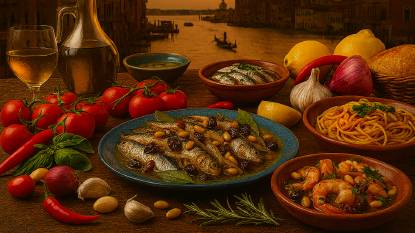


Venice’s cuisine is the distilled essence of a city that once commanded the world’s trade routes, a place where the Adriatic’s daily catch meets the spices, grains, and luxuries of far flung ports. From the Middle Ages onward, its markets brimmed with saffron, nutmeg, coffee, and cane sugar, while its kitchens learned to weave these treasures into dishes that balanced opulence with restraint. Here, sweet‑and‑sour marinades, jewel like raisins, and the clean taste of lagoon fish tell the story of a maritime republic whose table was as cosmopolitan as its canals.
🗺️ Gateway of the East and West
Venice, along with Friuli, marks the eastern-most border of the region of Venetia, which extends westward along the Italian frontier into Eastern Europe. She has a culinary history all her own.
In the Middle Ages, Venice was the nodal point connecting Europe with the rest of the world—a powerful maritime republic whose great fleet brought wonders from across the globe. The abundance of spices that marked medieval cooking came through this city. Bologna owes thanks to Venice for introducing nutmeg, a defining note in her famous ragù alla bolognese.
Arabs, Byzantines, Turks, Spaniards, Indians, and Jews all strolled alongside her canals. Coffee, cane sugar, and rice entered Europe through this port, altering the continent’s palate forever. Venetians worked fabrics, crystal, gems, and gold from faraway markets into the intricate material culture of their canal-side palazzos. Dining rooms became showcases for the world’s treasures.
🍴 The Fork and the Table as Theatre
The Venetians are said to have invented the fork, and with much delight they will tell you they dined with it while the French still had their hands in their porridge. This refinement was not mere affectation—it reflected a society accustomed to the delicate handling of rare and precious goods, whether silk from the Levant or saffron from Persia.
Banquets in Venice were as much about display as sustenance. The table was a stage for exotic ingredients, elaborate sugar sculptures, and dishes that told stories of distant ports.
🌍 A Culinary Palette Painted by Trade
This history, combined with the wealth of the sea, shapes Venice’s unique culinary present. Nuts, raisins, and spices mingle with local seafood in ways that recall the city’s mercantile past. The sweet-and-sour preparation known as saor—marinated fish with onions, vinegar, and raisins—may even trace its lineage to Chinese or Persian influences carried along the Silk Road.
| Ingredient / Influence | Origin | Venetian Use |
|---|---|---|
| Nutmeg | Banda Islands (via Arab traders) | Seasoning for meat sauces and pastries |
| Raisins & Pine Nuts | Eastern Mediterranean | Sweet-savoury seafood and meat dishes |
| Rice | Asia (via Arab and Venetian trade) | Foundation for risi e bisi and seafood risotti |
| Cane Sugar | Middle East | Confections, preserves, and festive pastries |
| Coffee | Ottoman Empire | Birth of the Venetian coffeehouse culture |
🐟 The Restraint of the Lagoon
Yet, for all the exoticism, the delicate freshness of the fish that make up so much of the Venetian diet restrains any impulse toward heavy spicing. Good seafood—whether lagoon-caught moleche (soft-shell crabs), branzino, or sardines—demands only the lightest preparation: a drizzle of olive oil, a squeeze of lemon, perhaps a whisper of parsley.
The result is a clean, elemental taste, sharpened by the occasional sweet-sour note, that is unmatched elsewhere in Italy.
🍽️ Signature Dishes of Venice
| Dish | Description | Notable Traits |
|---|---|---|
| Sarde in Saor | Sardines marinated with onions, vinegar, raisins, pine nuts | Balances sweet, sour, and briny |
| Risi e Bisi | Rice with fresh peas and pancetta | Springtime classic, halfway between soup and risotto |
| Bigoli in Salsa | Thick wholewheat pasta with anchovy-onion sauce | Humble yet deeply savoury |
| Fegato alla Veneziana | Calf’s liver with onions | Rich, sweet, and aromatic |
| Moleche Fritte | Fried soft-shell crabs | Seasonal lagoon delicacy |
Venice’s cuisine is a living archive of her history: the spice routes distilled into a sauce, the lagoon’s bounty plated with restraint, the elegance of a fork in hand centuries before the rest of Europe caught on. It is a table where East meets West, and where the past is never far from the palate.
Great Risotto in Venice [Video]
Featured Articles
Explore rich culinary stories, exclusive chef interviews, and expert insights from kitchens around the world. Discover cooking techniques, ingredient spotlights, and behind-the-scenes looks at the tools that shape global cuisine.
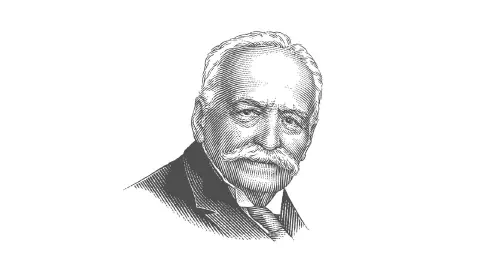
Georges Auguste Escoffier: Visionary Chef Who Revolutionized French Cuisine and Modern Cooking
Discover the life and legacy of Georges Auguste Escoffier, the legendary chef who transformed French cuisine and laid the foundation for modern culinary arts. This comprehensive historical profile …
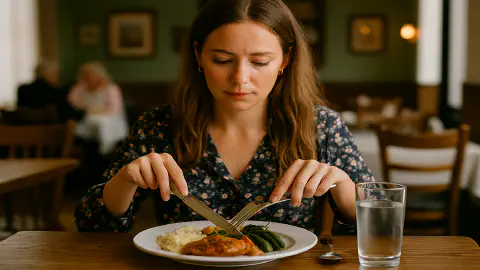
How to Use a Knife, Fork, and Spoon
Master the basics of Western table etiquette with this guide to using a knife, fork, and spoon. Learn practical tips, cultural context, and the subtle rules that shape how we dine.
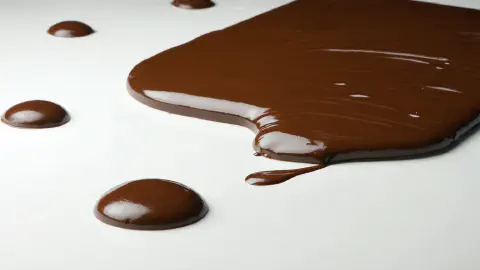
The History of Chocolate
Trace the fascinating history of chocolate—from its ancient origins with the Olmecs and Maya to its transformation into a global indulgence. Explore how cacao evolved from sacred ceremonial drink to …
Georges Auguste Escoffier: Visionary Chef Who Revolutionized French Cuisine and Modern Cooking
Discover the life and legacy of Georges Auguste Escoffier, the legendary chef who …
How to Use a Knife, Fork, and Spoon
Master the basics of Western table etiquette with this guide to using a knife, fork, and …
The History of Chocolate
Trace the fascinating history of chocolate—from its ancient origins with the Olmecs and …