Italian Sauces


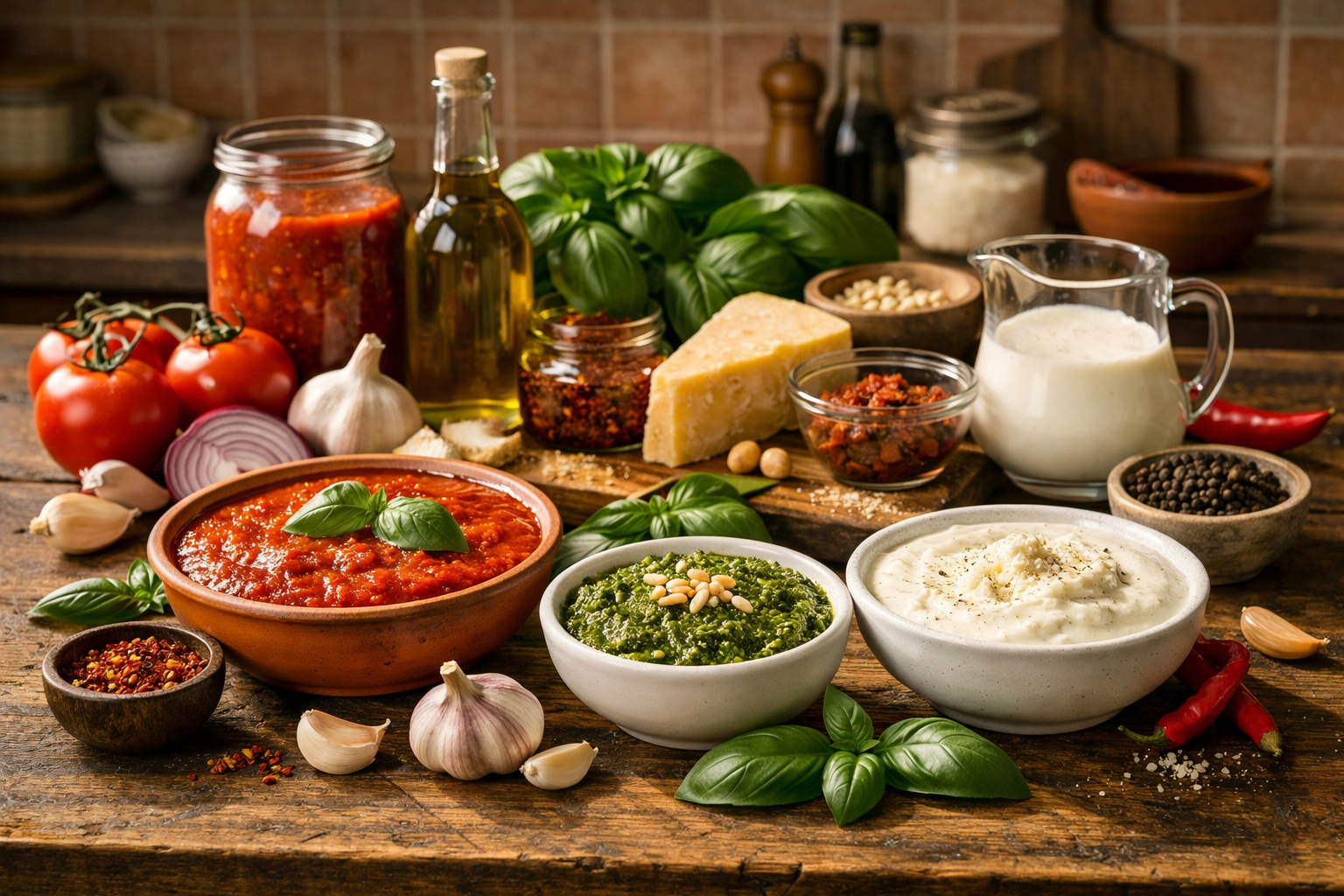
Italian cuisine has a reputation for being both wonderfully simple and deceptively complex. Nowhere is that tension more apparent than in the world of Italian sauces. Unlike the rigid mother sauce system of French cuisine, Italian sauces follow a different logic. They are built on good ingredients like olive oil, patient technique, and something the Italians call quanto basta: the right amount. Not a precise measurement. Just enough.
Here is how the sauce kitchen works in Italy, transforming the staples of the Italian pantry.
The Two White Sauces
Italian cuisine has two foundational white sauces, and they serve different purposes.
The first is balsamella (also called besciamella), Italy’s take on béchamel. It starts with a light roux: butter and flour cooked together just until they lose their raw edge. Then hot milk is whisked in slowly until the sauce is silky and thick. Balsamella is the backbone of dishes like lasagne al forno and cannelloni. It is rich, mild, and quietly essential. The French may have named it after Louis de Béchameil, a 17th century financier, but Italy adopted it so fully that many Italians insist it was theirs all along.
The second white sauce is salsa bianca, and this one is less known outside Italy. It follows the same roux technique as balsamella but swaps the milk for stock, often chicken or vegetable. The result is a savory white sauce that shows up in baked pastas and vegetable gratins. It carries less creaminess and more umami. Same method. Different soul.
Red Sauce and Ragù: A Matter of Patience
Every home cook in Italy can make a basic tomato sauce. You start with good canned tomatoes (San Marzano if you can find them), a little olive oil, garlic or onion, and time. That is the formula. Nothing fancy. But the magic happens when you let it simmer.
Then there is ragù, which is a different beast entirely.
The most famous version comes from Bologna. Ragù alla bolognese is not a tomato sauce with meat in it. It is a meat sauce built slowly through sweating, sautéing, and braising. The soffritto (onion, celery, carrot) comes first. Then minced beef or veal, a bit of fatty pork or pancetta, a splash of white wine, a touch of milk, and just a small amount of tomato paste. The whole thing simmers for hours until it becomes thick and deeply savory.
Here is the thing that still surprises people: in Bologna, you will never see ragù served over spaghetti. The sauce is too textured and substantial for thin strands. It clings best to broad, flat pasta like tagliatelle, or it appears in lasagne alla bolognese. The whole “spaghetti bolognese” thing is an Anglo-American invention, and Italians find it gently amusing.
(You can also make a fine ragù with mushrooms, using the same slow cooking method. The technique matters more than the protein.)
Beyond Red and White
Italian sauces go far beyond the basics, and they are often built on surprising foundations.
Pesto is the most famous of the green sauces: basil, pine nuts, garlic, Parmigiano-Reggiano, and olive oil, all pounded or blended into a fragrant paste. But there are other herb sauces too, often built around parsley, mint, or wild greens.
Maionese (Italian mayonnaise) is made from egg yolks and olive oil, emulsified by hand. It is lighter and more golden than the commercial stuff, and it shows up in everything from boiled meat salads to seafood antipasti.
Nut sauces made from walnuts, pine nuts, or almonds are a Ligurian specialty, often served with pasta. They are creamy without cream, relying on the nuts’ own oils for richness.
Bread crumb sauces (often called pangrattato in a different context) appear in southern Italian cooking, where toasted breadcrumbs are tossed with olive oil, garlic, and herbs to finish a pasta dish. It is the poor man’s cheese, and it works brilliantly.
Giblet sauces (like sugo di rigaglie) are a Tuscan tradition, using chicken livers and hearts cooked down with wine and aromatics. They are rustic, deeply savory, and a reminder that Italian cooking wastes nothing.
One Critical Difference from French Sauces
French sauces can break. An emulsion splits. A hollandaise curdles. A béchamel turns lumpy. Italian sauces, by contrast, are remarkably forgiving. Because they rely less on emulsified fats and more on slow concentration of flavor, they are harder to ruin. A ragù that sits too long only gets better. A balsamella can be rescued with a whisk and a little patience.
That resilience is not an accident. It reflects a broader philosophy in the Italian kitchen.
Quanto Basta: The Philosophy of Enough
Italian recipes often list an ingredient with the instruction quanto basta. It means, literally, “as much as is needed.” No quantity. No measuring cup. Just the cook’s judgment.
This is not laziness. It is trust. The recipe assumes you can taste, feel, and decide for yourself. How much salt? Quanto basta. How long to simmer? Until it is done. How much garlic? The right amount.
This is the philosophy that runs through every Italian sauce. Technique matters. Ingredients matter. But the final variable is always the cook. You learn to measure with your senses, not with a spoon. And when you get it right, you know. The sauce coats the pasta perfectly. The flavor is balanced but not fussy. It tastes like it could not be any other way.
That is what Italian sauces are really about. Not rules. Just the right amount.
Featured articles
Explore rich culinary stories, exclusive chef interviews, and expert insights from kitchens around the world. Discover cooking techniques, ingredient spotlights, and behind-the-scenes looks at the tools that shape global cuisine.

Georges Auguste Escoffier: Visionary Chef Who Revolutionized French Cuisine and Modern Cooking
Discover the life and legacy of Georges Auguste Escoffier, the legendary chef who transformed French cuisine and laid the foundation for modern culinary arts. This comprehensive historical profile …

How to Use a Knife, Fork, and Spoon
Master the basics of Western table etiquette with this guide to using a knife, fork, and spoon. Learn practical tips, cultural context, and the subtle rules that shape how we dine.

The History of Chocolate
Trace the fascinating history of chocolate, from its ancient origins with the Olmecs and Maya to its transformation into a global indulgence. Explore how cacao evolved from sacred ceremonial drink to …
Georges Auguste Escoffier: Visionary Chef Who Revolutionized French Cuisine and Modern Cooking
Discover the life and legacy of Georges Auguste Escoffier, the legendary chef who …
How to Use a Knife, Fork, and Spoon
Master the basics of Western table etiquette with this guide to using a knife, fork, and …
The History of Chocolate
Trace the fascinating history of chocolate, from its ancient origins with the Olmecs and …