French Pastry

By: Simon
July 26, 2026 | Updated: September 12, 2026
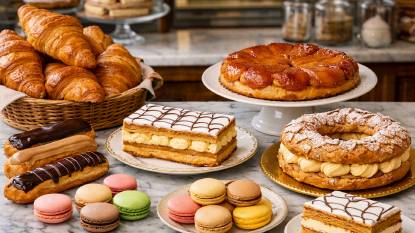

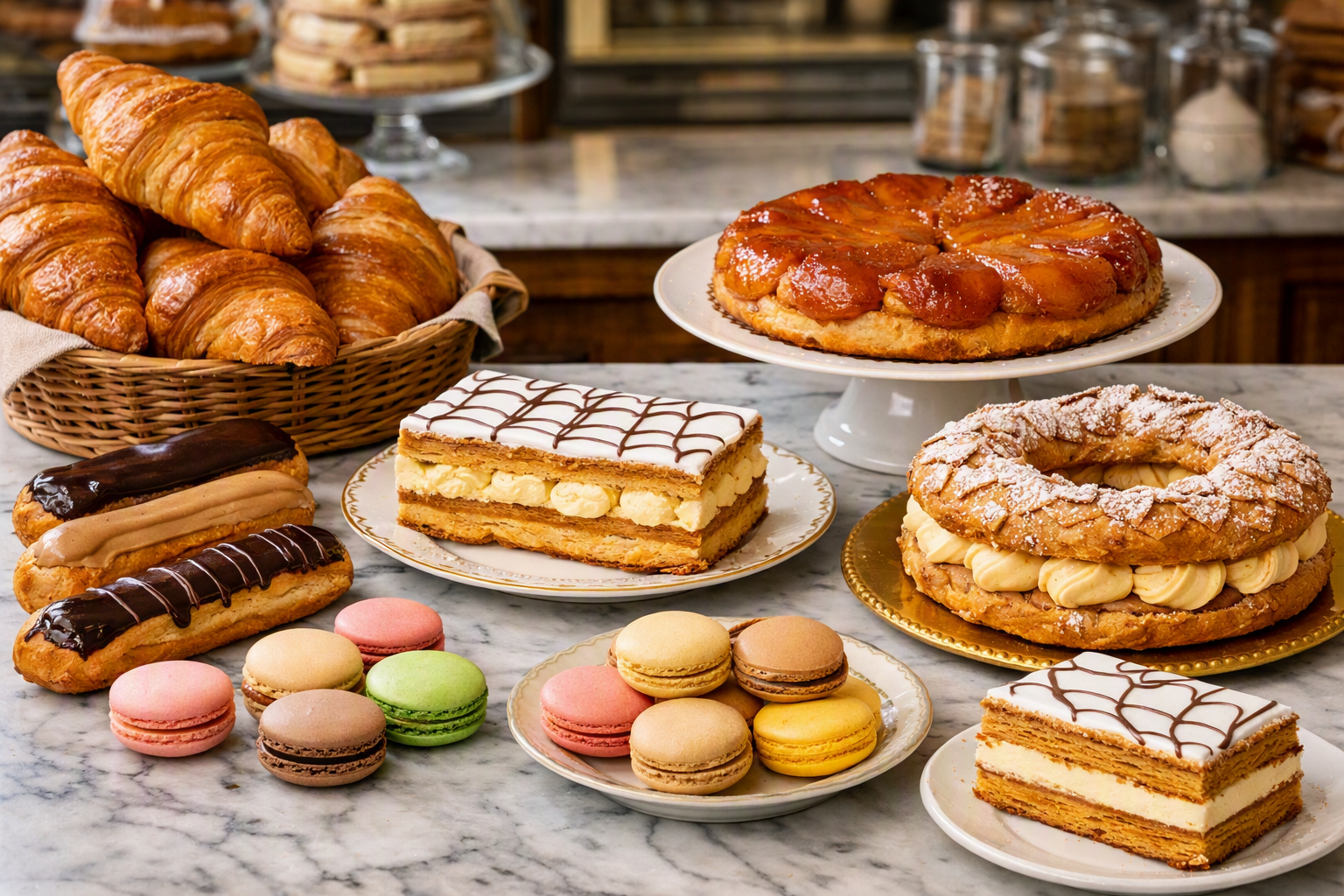
There is a moment, repeated thousands of times each morning across France, that captures the country’s relationship with pastry. A customer pushes open the door of a pâtisserie, a small bell chimes, and there, behind spotless glass, sits a row of creations so precise, so architecturally composed, that they look less like food and more like jewellery. This is not an accident. In France, pastry is not merely baking. It is a discipline, an art form, and a national obsession that has shaped the way the entire world thinks about sweet things. Pâtisserie is such an iconic part of French cuisine that thousands, if not millions of books, lectures and hours of training have been dedicated to it’s creation and enjoyment.
The French did not invent sugar, butter, or flour. But they turned those ingredients into a vocabulary, a grammar of laminated dough, choux, meringue, and crème that every professional pastry chef on earth must learn. Understanding French pastry is understanding the foundation of modern dessert craft.
The Pastry Chef: A Separate Calling
In a classic French restaurant kitchen, the pastry chef occupies a world apart. The pâtissier works in a separate section, often in a separate room, because pastry demands conditions that the main kitchen cannot provide: precise temperature control, undisturbed work surfaces, and a methodical pace that would be impossible in the heat of service. This separation is not arbitrary. It reflects a fundamental truth about French cooking: pastry is not an extension of cuisine. It is a parallel discipline with its own techniques, its own equipment, and its own standards of excellence.
The separation between baker and pastry chef has deep roots. By the 17th century in France, the guilds had made these legally distinct professions. A boulanger made bread. A pâtissier made everything else: tarts, cakes, creams, and the elaborate sugar sculptures that graced royal tables. This division meant that pastry in France developed its own masters, its own apprenticeships, and its own ambitions, free from the constraints of the boulangerie.
The Great Codifiers: Carême and Escoffier
The foundation of modern French pastry was laid by two men who transformed craft into science.
Marie-Antoine Carême, born in 1784, is often called the first celebrity chef. He began his career as a pastry apprentice and rose to cook for kings and emperors. Carême’s genius was codification. He systematized French pastry into a body of knowledge that could be taught, studied, and passed down. His five-volume works established the principle that pastry should aspire to visual perfection as much as flavour, and his architectural showpieces, temples and ruins built entirely from sugar and marzipan, set a standard of ambition that still inspires pastry chefs today.
Auguste Escoffier, building on Carême’s legacy in the late 19th and early 20th centuries, fully integrated pastry into the modern kitchen brigade system. He structured the professional kitchen so that the pâtissier had a defined role with clear responsibilities, and his influence ensured that French pastry remained central to the identity of French gastronomy.
The Vocabulary of French Pastry: Five Essential Doughs
French pastry rests on a handful of elemental doughs, each with its own character, its own technique, and its own family of creations.
Pâte Feuilletée: Puff Pastry
Puff pastry is the most technically demanding of all French doughs. A base dough called the détrempe, made from flour and water, is wrapped around a block of butter called the beurrage. The package is rolled out, folded in three, turned, and rolled again. This sequence, repeated six times in the classic method, creates 729 alternating layers of dough and butter. When baked, the water in the butter turns to steam, forcing the layers apart. The result is shatteringly crisp, impossibly light, and deeply buttery.
The quality of the butter is critical. French butter, particularly the AOP beurre from Poitou-Charentes, contains at least 82% butterfat, significantly higher than most European butters. This low moisture content is essential for creating distinct, separate layers during lamination.
Puff pastry is the foundation of the mille-feuille (three layers of pastry sandwiching crème pâtissière, topped with fondant icing and a feathered chocolate pattern), the vol-au-vent (a puff pastry shell shaped like a small pot with a lid, traditionally filled with a cream-sauce mixture of chicken, fish, meat, or vegetables), and palmiers (cookies made by rolling puff pastry in sugar, folding, slicing, and baking until caramelised). The name vol-au-vent means “flying in the wind,” an evocative description of the pastry’s extraordinary lightness. Vol-au-vent shells can range from individual bite-sized portions to large centrepiece creations for banquets.
Pâte à Choux: Choux Pastry
Choux pastry is one of the great inventions of French cooking, and its story begins in the 16th century. When Catherine de’ Medici left Italy to marry the future King Henry II of France in 1540, she brought her entire culinary team, including a chef named Panterelli, who is credited with creating a precursor to what would become pâte à choux. The dough as we know it today was refined in the 18th century by the pastry chef Avice and later perfected by the great Antonin Carême.
Unlike other pastries, choux is cooked twice. First on the stovetop, where flour is beaten into boiling water and butter until the mixture forms a smooth ball that pulls away from the pan. Then in the oven, where eggs incorporated into the dough create steam that puffs the pastry into a hollow shell. The name “choux” means cabbage, which the puffs supposedly resemble.
This single dough is the basis for a remarkable range of creations: éclairs (oblong shells filled with cream and topped with icing), profiteroles (small puffs filled with ice cream or cream, often drizzled with chocolate), Paris-Brest (a wheel-shaped puff filled with praline cream, created in 1910 by Louis Durand to honour the Paris-Brest-Paris bicycle race), and the towering croquembouche (a cone of cream puffs cemented with caramelised sugar, traditionally served at weddings and baptisms).
The éclair has enjoyed a dramatic renaissance in the 21st century. Christophe Adam, former head pastry chef at Fauchon, transformed it into a vehicle for wildly inventive flavours with his L’Éclair de Génie boutiques. But the classics endure: chocolate, coffee, and vanilla remain the three pillars of any serious pâtisserie’s éclair selection.
Pâte Brisée: Shortcrust Pastry
Pâte brisée is a rich, flaky dough made from flour, butter, water, and salt. It contains no sugar, making it the savoury workhorse of French pastry. It is the classic crust for quiches (most famously quiche Lorraine), savoury tarts, and pâté en croûte. The technique is simple but unforgiving: the butter must be cut into the flour until it resembles coarse meal, and the water must be ice-cold. Overwork the dough and the gluten develops, producing a tough, shrinking crust.
Pâte Sucrée: Sweet Pastry
Pâte sucrée is the sweet cousin of pâte brisée, enriched with sugar and often egg yolks. It produces a tender, cookie-like crust that holds its shape perfectly when baked blind. This is the dough for fruit tarts, lemon tarts, and the filled cookies called tartelettes. Pâte sucrée is less flaky than pâte brisée because the sugar inhibits gluten development, but this is exactly what makes it ideal for delicate sweet fillings.
Pâte Sablée: Shortbread Pastry
Pâte sablée is the richest of the French pastry doughs, with a higher proportion of butter and sugar that gives it a melting, sandy texture (sablé means sandy). It is the base for French butter cookies (the sablé itself), as well as for delicate tart shells where a crumbly, tender bite is desired. Like pâte sucrée, it must be handled gently and kept cold.
Viennoiserie: The Morning Pastries
Viennoiserie occupies a category of its own, distinct from both pastry and bread. The term means “things from Vienna,” referring to the Austrian bakers who brought enriched doughs to Paris in the early 19th century. The croissant, the pain au chocolat, and the brioche all fall under this heading.
The Croissant
The croissant is the most famous pastry on earth, yet it did not begin in France. The standard legend, that it was invented to celebrate the defeat of the Ottoman siege of Vienna in 1683, its crescent shape mocking the Ottoman flag, is almost certainly apocryphal. What is true is that a crescent-shaped bread called the kipferl existed in Austria long before it reached Paris.
The kipferl arrived in France in the early 19th century, brought by Viennese bakers who opened shops in Paris. But the Austrian original was a simple bread dough. The genius of French bakers was to apply the technique of lamination, folding butter into the dough in repeated turns to create dozens of paper-thin alternating layers. A properly made croissant requires a minimum of 27 layers. The dough must be cold enough that the butter stays solid during folding but warm enough that it does not crack. The shaping, rolling a triangle of dough from base to tip, determines the final form.
Brioche
Brioche is the richest of the viennoiserie doughs, enriched with eggs and butter to such a degree that it occupies a category between bread and pastry. Chef Joël Robuchon described it as “light and slightly puffy, more or less fine, according to the proportion of butter and eggs.” It has a dark, golden, flaky crust and a tender, airy crumb. Brioche is used for everything from the classic brioche à tête (a fluted roll with a top knot) to the base for pain perdu (French toast) and the wrapping for foie gras.
The Iconic Creations
The Macaron
No French pastry provokes more passion than the macaron. The coconut macaroon is a different creature entirely. The French macaron is two smooth, rounded discs of almond meringue sandwiching a layer of ganache, buttercream, or jam, and it is one of the most technically demanding items in all of pâtisserie.
Macarons existed in France from at least the 16th century. The macarons of Nancy and those of Saint-Émilion were simple, rustic almond cookies. The sandwiched macaron as we know it was created at Ladurée in the early 20th century, when Pierre Desfontaines had the idea of joining two macaron shells with a ganache filling.
If Ladurée democratised the macaron, Pierre Hermé revolutionised it. Often called the Picasso of Pastry, Hermé introduced unprecedented flavour combinations that treated the macaron as a vehicle for haute couture flavour design. His Ispahan, a combination of rose, lychee, and raspberry, became one of the most imitated flavour profiles in modern pâtisserie. By 2026, Hermé presides over 110 outlets worldwide, a global empire built on the almond meringue sandwich.
The hallmark of a well-made macaron is the pied, the delicate ruffled foot that forms at the base of each shell during baking. Achieving this requires precise technique in the macaronnage, the folding stage where the meringue and almond mixture are combined. Two methods dominate: the French method (whipping egg whites with sugar) and the Italian method (pouring hot sugar syrup into whipping egg whites). Most professionals prefer the Italian method for its reliability.
Mille-Feuille
The mille-feuille, known in much of the English-speaking world as a Napoleon, is an exercise in textural contrast. Three layers of puff pastry are sandwiched with crème pâtissière and topped with fondant icing, traditionally decorated with a feathered chocolate pattern. The challenge lies in the tension between crispness and cream: eat it too slowly and the pastry softens; eat it too quickly and the cream squirts sideways. The correct technique is to tip it on its side and cut through the layers with your fork.
Tarte Tatin
The tarte Tatin is French pâtisserie’s happiest accident. In the 1880s at the Hôtel Tatin in Lamotte-Beuvron, one of the Tatin sisters, probably Stéphanie, began making an apple tart but left the apples cooking in butter and sugar for too long. In a panic, she placed the pastry on top of the caramelised apples and baked it anyway, then flipped the whole thing upside down to serve. The result was magnificent, deeply caramelised fruit beneath a crisp pastry lid. The tarte Tatin reached Parisian fame when the owners of Maxim’s restaurant reportedly sent a spy to obtain the recipe. Today it remains one of the most beloved desserts in France.
Opéra
The Opéra cake is a rectangular creation of impeccable geometry: thin layers of almond sponge (joconde) soaked in coffee syrup, alternating with coffee buttercream and chocolate ganache, the whole glazed with a mirror-smooth chocolate icing. Traditionally attributed to Maison Dalloyau, which named it for the Opéra Garnier, its defining feature is that every layer is visible when the cake is sliced, a cross-section of perfect parallel lines.
Madeleine
The madeleine is a small, shell-shaped sponge cake that would be merely pleasant were it not for Marcel Proust. In À la recherche du temps perdu, the narrator dips a madeleine into lime-blossom tea and is flooded with involuntary memory. Properly made madeleines, with browned butter and a resting period that produces the characteristic dome, are buttery, fragrant, and best eaten warm.
Cannelé de Bordeaux
The cannelé is a small, cylindrical cake with a dark, caramelised crust and a soft, custardy interior flavoured with rum and vanilla. Its origins are debated. Some credit the nuns of the Couvent des Annonciades in Bordeaux. Others point to the city’s wine trade, where egg whites were used to fine wine and the leftover yolks needed a purpose. A proper cannelé requires a copper mould coated in beeswax, which produces its signature dark, chewy crust.
Galette
A galette is a round, flat cake made from flaky pastry, yeast dough, or unleavened dough. The term is broad, covering both sweet and savoury preparations, but its most famous incarnation is the galette des rois (kings’ cake), the traditional pastry served on Twelfth Night (Epiphany) on January 6. This festive galette is made from puff pastry layers filled with frangipane, an almond cream, and baked until golden. A small ceramic charm called a fève is hidden inside, and whoever finds it in their slice is crowned king or queen for the day. The tradition dates to the 14th century and remains one of France’s most cherished culinary rituals, with pâtisseries across the country selling millions of galettes des rois each January. Beyond the Epiphany cake, the term galette also describes simple buckwheat crêpes from Brittany (galettes de sarrasin) and rustic free-form tarts.
Gaufrettes
Gaufrettes are thin, sweet, fan-shaped wafers often served alongside desserts like puddings and ice creams. Their surface is sometimes waffled with a delicate grid pattern, and they are sometimes folded while warm to form ice cream cones. The name comes from gaufre, the French word for waffle. A savoury variation, gaufrettes pommes de terre, are latticed potato crisps, the original inspiration for ridged potato chips. Their light, brittle texture makes them a favourite garnish in both classic and modern French dessert plating.
Tuile
A tuile, the French word for “tile,” is a thin, crisp cookie that is shaped while still warm by being draped over a curved object such as a rolling pin or cup, or by being baked in a specialized tuile mold. When cooled and hardened, it resembles a curved roof tile. The classic tuile is made from crushed almonds, sugar, butter, and flour, baked until lacy and golden. Tuiles are used as elegant garnishes for plated desserts, often perched atop mousses, ice creams, or crème brûlée. Their dramatic curved shape adds height and visual sophistication while providing a delicate crunch. Modern pastry chefs have expanded the repertoire to include tuiles made from sesame, coconut, citrus zest, and even cheese for savoury applications.
The Modern Masters: French Pastry in 2026
French pastry continues to dominate the global dessert landscape. Paris has been named the world’s leading pastry destination in Food & Wine’s Global Tastemakers Awards for three consecutive years, 2024, 2025, and 2026. In June 2026, La Liste announced its annual Pastry Awards in Paris, recognising the world’s leading pâtisseries and the pastry chefs behind the most inventive sweet creations, from Paris to Singapore to Kyoto.
Cédric Grolet, head pastry chef at Le Meurice in Paris, is the most followed pâtissier on social media. His signature creations are hyper-realistic fruit sculptures, a lemon that looks like a lemon, an apple that looks like an apple, made from layered pastry, mousse, and glaze. His work blurs the line between pâtisserie and trompe-l’oeil art, and his boutique on Avenue de l’Opéra draws queues that stretch around the block.
Pierre Hermé remains the towering figure of French pastry. A fourth-generation Alsatian pâtissier who apprenticed at Lenôtre aged 14, he has spent decades redefining flavour. His concept of haute pâtisserie treats cakes and pastries with the creative seriousness of haute couture. Flavour, not decoration, drives every creation.
International influence now flows in both directions. French pastry continues to inspire chefs across the globe while remaining remarkably open to ideas from other culinary cultures. Classic creations are now enriched with yuzu, black sesame, matcha, and Japanese citrus. Pastry chefs are increasingly exploring umami, sweet-and-savoury combinations, and fermentation. The objective is no longer simply sweetness but nuance and elegance.
The MOF: The Highest Honour
The Meilleur Ouvrier de France (MOF) competition in pâtisserie is the most gruelling test of craft in the pastry world. Created in 1924 and inscribed in the French Code of Education, it is held every four years. Candidates must complete days of increasingly demanding practical tests: sugar work, chocolate work, entremets, viennoiseries, petit fours, all judged to exacting standards by previous MOF holders.
Those who pass earn the right to wear the distinctive blue-white-red collar on their chef’s jacket for life. The MOF is not a competition of innovation. It is a confirmation of mastery. Holding the title places a pâtissier in the uppermost echelon of French craft, and the collar is recognised worldwide as a mark of absolute technical authority. In March 2026, qualifying examinations for the next MOF cycle were underway, with candidates gathering in Nancy for the pastry and confectionery category.
The Training Pipeline
The future of French pastry depends on its ability to pass on knowledge. The École Nationale Supérieure de Pâtisserie (ENSP), the world’s largest campus entirely dedicated to the sweet arts, welcomed a student body in 2026 of whom more than 40% come from abroad, representing nearly 80 different nationalities. The school’s director, Luc Debove, a Meilleur Ouvrier de France himself, describes the mission as transmitting not just technique but “a methodology, a mindset, and a philosophy of the profession founded on respect for ingredients, precision of technique, and the constant pursuit of excellence.”
National competitions continue to identify rising talent. In April 2026, Enzo Chantre was named Meilleur Apprenti de France Pâtissier in a fiercely contested national final held in Arcachon. The Championnat de France du Dessert 2026 crowned Adrien Salavert as champion in the professional category, with his creation impressing a jury of MOF holders.
Pastry in Savoury Cooking
Pastry in France is not reserved for dessert. Puff pastry shells called vol-au-vent, whose name means “flying in the wind” for their airy lightness, are filled with chicken, fish, meat, or vegetables in cream sauce. Pâte brisée encloses savoury tarts and quiches. Brioche dough wraps pâtés and sausages. The same technical skills that produce a perfect croissant or éclair are called upon for a salmon en croûte or a beef Wellington. This versatility is why the pâtissier’s craft extends far beyond the sweet course.
French Pastry in 2026: Trends and Challenges
The world of French pastry has never been more dynamic. Global dessert trends in 2026 are increasingly shaped by the pursuit of well-being and emotional balance, with reduced sugar, greater nutritional balance, and a stronger emphasis on plant-based ingredients and seasonality. These developments do not undermine the foundations of French pastry. They build upon them.
The World Pastry Cup (Coupe du Monde de la Pâtisserie), held every two years in Lyon, remains the most prestigious international pastry competition. In January 2026, the French team of Yoan Palamara (chocolate), Abel Nesson (sugar), and Axel Lebellanger (ice cream) won the European selection, securing their place in the global final. With 52 countries now competing and more than 200,000 visitors attending, the Coupe du Monde demonstrates that French pastry, while still the global benchmark, now operates in a truly international arena.
Perhaps the most encouraging sign for the future is that French pastry no longer seeks to impose a single model. It continues to inspire, to pass on its expertise, and to evolve through dialogue with other cultures. As Luc Debove puts it, “A global benchmark is not one that seeks to impose a single model. It is one that continues to inspire, to pass on its expertise, and to evolve through dialogue with other cultures.”
Why French Pastry Endures
The best pâtisseries turn over their entire stock daily. A tart made in the morning is sold by noon or discarded. This is the unforgiving economy of freshness: French pastry exists, at its peak, in a window of a few hours. You cannot stockpile a perfect éclair. You can only enjoy it now, in the moment.
This ephemerality is part of its beauty. French pastry demands precision, rewards mastery, and punishes shortcuts. It is built on foundations laid by Carême and Escoffier, sustained by a training system that produces the world’s most technically accomplished pastry chefs, and continually renewed by the creativity of artists like Hermé and Grolet. It is both a tradition and a living, evolving art form.
From a simple chouquette eaten on the walk home from school to a hyper-realistic fruit sculpture that stops traffic on the Avenue de l’Opéra, French pastry is a reminder that the most extraordinary things can be made from the most ordinary ingredients: flour, butter, sugar, eggs. The magic is in what you do with them.
French Pastry Video
Featured articles
Explore rich culinary stories, exclusive chef interviews, and expert insights from kitchens around the world. Discover cooking techniques, ingredient spotlights, and behind-the-scenes looks at the tools that shape global cuisine.
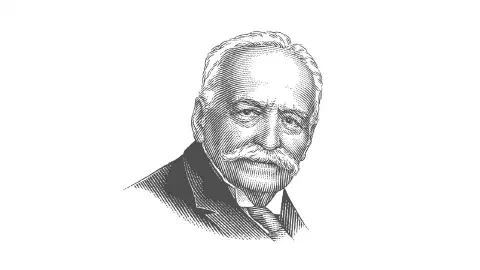
Georges Auguste Escoffier: Visionary Chef Who Revolutionized French Cuisine and Modern Cooking
Discover the life and legacy of Georges Auguste Escoffier, the legendary chef who transformed French cuisine and laid the foundation for modern culinary arts. This comprehensive historical profile …
How to Use a Knife, Fork, and Spoon
Master the basics of Western table etiquette with this guide to using a knife, fork, and spoon. Learn practical tips, cultural context, and the subtle rules that shape how we dine.
The History of Chocolate
Trace the fascinating history of chocolate, from its ancient origins with the Olmecs and Maya to its transformation into a global indulgence. Explore how cacao evolved from sacred ceremonial drink to …
Georges Auguste Escoffier: Visionary Chef Who Revolutionized French Cuisine and Modern Cooking
Discover the life and legacy of Georges Auguste Escoffier, the legendary chef who …
How to Use a Knife, Fork, and Spoon
Master the basics of Western table etiquette with this guide to using a knife, fork, and …
The History of Chocolate
Trace the fascinating history of chocolate, from its ancient origins with the Olmecs and …