🥢A Chinese Banquet

By: Simon
August 28, 2025 | Updated: February 17, 2026
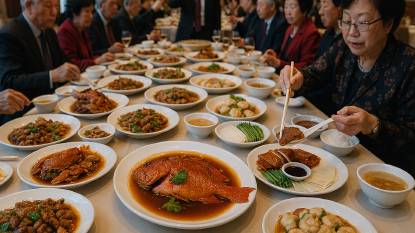


Banquets in Chinese cuisine culture are more than meals—they are ceremonial expressions of joy, status, and tradition. Held to mark major occasions such as Lunar New Year, the Mid-Autumn Festival, weddings, and milestone birthdays, these gatherings blend culinary abundance with ritualized etiquette. Each event carries its own symbolic treats—filled mooncakes for the Moon Festival, sticky rice pudding for New Year—but beneath the seasonal variations lie shared customs that define the banquet experience.
A Chinese banquet acquires its festive character through two key dynamics: the suspension of everyday eating custom restraint, and the amplification of social rituals. Rice, typically the anchor of daily meals, is demoted to a symbolic afterthought. Meanwhile, gestures of politeness between host and guest—normally subdued—are performed with theatrical flair.
🚪 Getting In: The Ritual of Entry
The banquet begins before the first bite is taken. As guests arrive, an elaborate ceremony of deference unfolds at the doorway. The most honored guest is expected to enter first, but this can spark a polite standoff, with attendees insisting others are more deserving. Among close friends, this ritual may escalate into playful pushing and mock protest.
Once inside, the seating arrangement becomes the next site of negotiation. The guest of honor is seated directly opposite the host, who occupies the least prestigious spot—typically near the serving door. This spatial choreography reinforces hierarchy while showcasing the host’s humility.
🍽️ Serving the Meal: Generosity in Motion
Unlike everyday Chinese meals, which are served all at once, a banquet unfolds in successive courses. This pacing reflects abundance, hospitality, and celebration. The host, in a gesture of exaggerated modesty, often apologizes for the “meager” offerings about to be served—despite the lavish spread that follows.
Hot towels are distributed at both the beginning and end of the meal, signaling care and refinement. Each course arrives with its own rhythm, and the host remains actively engaged, ensuring guests are well attended to.
🥡 What Is Served: Beyond the Grain
In a dramatic reversal of daily norms, banquets center on dishes that are typically secondary—meats, seafood, and elaborate vegetable preparations. The grain component (fan), usually the backbone of a Chinese meal, is withheld until the end. Guests are expected to merely pick at it, signaling that they are already satisfied.
To eat one’s rice at a banquet might imply the host failed to provide enough food—a subtle but potent breach of etiquette.
🍶 What Is Drunk: The “Wine-Spread”
Alcohol, rarely present at everyday meals, plays a central role in banquets. The term chiu-hsi literally means “wine-spread,” underscoring its importance. Unlike Western customs, where drink pairings are tailored to courses or guest preferences, Chinese banquets typically feature a single type of alcohol—often rice wine or a strong spirit—chosen by the host and served throughout.
Wine glasses are filled at the start of each course, and drinking games or toasting rituals punctuate the evening. These exchanges are not just for merriment—they reinforce bonds, express respect, and elevate the celebratory mood.
🥢 Dining Impements
Dining implements are an extension of the ceremony. While spoons are used for soups and shared serving utensils are provided, the primary tool is the chopstick. More than mere utensils, they are instruments of precision and etiquette—used to select morsels from shared plates, never to spear food, point at others, or stand upright in a bowl of rice (a potent funerary symbol). Their deft use underscores the communal, selective nature of the banquet, where each guest actively participates in crafting their own plate from the theatrical procession of dishes.
🥂 Commencement of the Meal: Toasts and Timing
The meal officially begins with a toast from the host. Guests then engage in a subtle ceremony of delay—the longer one waits to begin eating, the more politeness is conveyed. Throughout the meal, the host remains solicitous, offering food and drink repeatedly. Guests may decline two or three times before accepting, in keeping with the ritual of polite refusal.
This dance of offer and refusal is not literal—it’s a performance of mutual respect.
🍤 The Courses: Culinary Theatre
Banquet courses follow a traditional arc, where the meal itself is the medium through which the host expresses goodwill and celebration.
- Cold Dishes: The first course is an even-numbered selection of cold dishes—traditionally eight or ten. These include marinated meats, jellyfish, pickled vegetables, and pressed tofu.
- Showpiece Soup: A showy soup, such as shark’s fin or bird’s nest soup, often follows. The guests help themselves to most dishes, but the soup is served by the host, accompanied by much drinking and toasting.
- Decorative Meat Dishes: More courses arrive in succession—lobster, pork, scallops, chicken—each plated with visual flair.
- Interlude Sweets: Between savory courses, a variety of sweets are offered, like glutinous rice balls, candied fruits, or sesame pastries.
- Signature Dish: Peking duck with scallion brushes, hoisin sauce, and thin pancakes is often served in the middle of the festivities.
- Finale: Traditionally, the final course is a whole fish, symbolizing abundance and unity. It is placed with its head pointed toward the guest of honor.
Throughout the meal, guests offer elaborate compliments to the food. Enjoyment of the food is paramount, with conversation being secondary. At a banquet, the food itself is the medium communicating the host’s good wishes and the joy of the celebration.
📚 Reading List
Sponsored links
- Everything You Want to Know about Chinese Cooking by Pearl Kong Chen, Tien Chi Chen, and Rose Tseng. Woodbury, New York: Barron’s, 1983.
- How to Cook and Eat in Chinese by Buwei Yang Chao. New York: The John Day Company, 1945.
- Food in Chinese Culture: Anthropological and Historical Perspectives, edited by Kwang-chih Chang. New Haven: Yale University Press, 1977.
Featured Articles
Explore rich culinary stories, exclusive chef interviews, and expert insights from kitchens around the world. Discover cooking techniques, ingredient spotlights, and behind-the-scenes looks at the tools that shape global cuisine.

Georges Auguste Escoffier: Visionary Chef Who Revolutionized French Cuisine and Modern Cooking
Discover the life and legacy of Georges Auguste Escoffier, the legendary chef who transformed French cuisine and laid the foundation for modern culinary arts. This comprehensive historical profile …
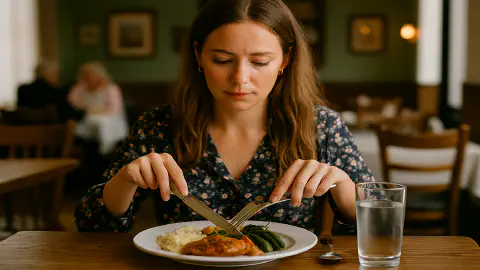
How to Use a Knife, Fork, and Spoon
Master the basics of Western table etiquette with this guide to using a knife, fork, and spoon. Learn practical tips, cultural context, and the subtle rules that shape how we dine.
The History of Chocolate
Trace the fascinating history of chocolate—from its ancient origins with the Olmecs and Maya to its transformation into a global indulgence. Explore how cacao evolved from sacred ceremonial drink to …
Georges Auguste Escoffier: Visionary Chef Who Revolutionized French Cuisine and Modern Cooking
Discover the life and legacy of Georges Auguste Escoffier, the legendary chef who …
How to Use a Knife, Fork, and Spoon
Master the basics of Western table etiquette with this guide to using a knife, fork, and …
The History of Chocolate
Trace the fascinating history of chocolate—from its ancient origins with the Olmecs and …