Olive Oil

By: Simon
February 12, 2019 | Updated: February 17, 2026
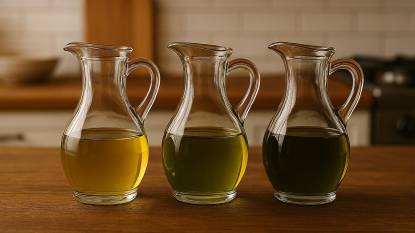


Olive Oil: The Liquid Gold of the Mediterranean
Olive oils come in various grades and intensities. Hand-culled olives for the highest quality oil must be pressed quickly — within 24 to 48 hours for best results. The first pressing happens between great rollers of stone or steel. Stone is best because it is softer than steel and it doesn’t conduct heat. The first oil produced is called “extra-virgin olive oil.” The mashy pulp left over is then mixed with hot water and processed to make second and third press oils.
Olive groves line the rocky hillsides of [Italy](/world/italian-cuisine/ “Italian cuisine” and the Mediterranean coast. For millennia, the region has produced gorgeous olives (they were a favorite street snack in ancient Rome and olive oils (tools for making olive oil that date back 4500 years have been found in Crete). The average age of southern Italian olive trees is between 300 and 600 years — the olive tree doesn’t even begin producing edible fruit before its 25th year. Today, Spain, France, Greece, Italy, and California all produce high quality olive oils from those old olive trees.
The state regulates the labeling of olive oils according to the level of acidity. “Extra virgin” has less than 1 percent oleic acidity and less than 0.5 percent in the very best oil; “superfine virgin” can have up to 1.5 percent acidity; “fine” or “regular virgin” ranges from 1.5 to 3 percent acidity; and “virgin” or “pure” has up to 4 percent.
Any oil with an acidity level higher than 4 percent is only good forlamps. This classification, however, can be misleading because modern chemical processing can greatly reduce acid levels no matter what the quality of the oil. A lesser oil can processed to a .05 percent acidity level, be packaged as “extra virgin,” and still taste terrible.
One clue to look for - if a label reads “cold pressed” then it has notbeen refined and is of a higher quality. It will also be of a higher price.
🌿 What Is Olive Oil?
Olive oil is a natural oil extracted from olives, the fruit of the olive tree (Olea europaea), native to the Mediterranean region. Revered for centuries, it’s a cornerstone of Mediterranean cuisine and praised for its health benefits, culinary versatility, and rich flavor profile.
There are several types of olive oil, but Extra Virgin Olive Oil (Extra Virgin Oilive Oil) is the highest quality—made by cold-pressing olives without the use of chemicals or heat.
🧪 Nutritional Profile of Extra Virgin Olive Oil (per 1 tbsp / 13.5g)
| Nutrient | Amount | % Daily Value |
|---|---|---|
| Calories | 119 kcal | — |
| Total Fat | 13.5 g | 21% |
| Saturated Fat | 2 g | 10% |
| Monounsaturated Fat | 10 g | — |
| Polyunsaturated Fat | 1.5 g | — |
| Vitamin E | 1.9 mg | 13% |
| Vitamin K | 8.1 µg | 10% |
| Carbohydrates | 0 g | 0% |
| Protein | 0 g | 0% |
| Cholesterol | 0 mg | 0% |
✅ Key Takeaway: Olive oil is calorie-dense but packed with heart-healthy monounsaturated fats and antioxidants.
❤️ Health Benefits of Olive Oil
Olive oil isn’t just delicious—it’s a nutritional powerhouse:
- 🫀 Heart Health: Rich in monounsaturated fats, which help reduce LDL (bad) cholesterol and increase HDL (good) cholesterol.
- 🧠 Brain Function: Contains polyphenols and vitamin E, which may protect against cognitive decline.
- 🔥 Anti-inflammatory: Oleocanthal, a compound in Extra Virgin Oilive Oil, mimics the effects of ibuprofen.
- 🧬 Antioxidant-Rich: Helps combat oxidative stress and cellular damage.
- 🩺 Blood Sugar Control: May improve insulin sensitivity when consumed with meals.
🍳 Culinary Uses of Olive Oil
Olive oil is incredibly versatile in the kitchen:
✅ Best Uses for Extra Virgin Olive Oil
- 🥗 Salad dressings
- 🍞 Dipping sauces
- 🧄 Marinades
- 🍝 Finishing oil for pasta
- 🥘 Light sautéing
⚠️ Avoid High-Heat Cooking
Extra Virgin Olive Oil has a smoke point of ~190–210°C (374–410°F). For deep frying or high-heat cooking, consider refined olive oil or light olive oil.
🧴 Types of Olive Oil
| Type | Description | Best Use |
|---|---|---|
| Extra Virgin Olive Oil | Highest quality, cold-pressed, rich flavor | Raw dishes, finishing |
| Virgin Olive Oil | Slightly lower quality, still cold-pressed | Light cooking |
| Refined Olive Oil | Chemically treated, neutral flavor | High-heat cooking |
| Pomace Olive Oil | Extracted from olive pulp, lowest quality | Industrial use |
🌍 Olive Oil Production & Origins
Top producers include:
- 🇪🇸 Spain – largest global producer
- 🇮🇹 Italy – known for artisanal varieties
- 🇬🇷 Greece – high polyphenol content
- 🇹🇷 Turkey – rising in global exports
Harvest season typically runs from October to January, with oils varying in flavor depending on olive variety, region, and processing method.
🛒 How to Choose Quality Olive Oil
- ✅ Look for “Extra Virgin” on the label
- 🧊 Choose cold-pressed and unfiltered if possible
- 🌑 Opt for dark glass bottles to protect from light
- 📅 Check harvest or expiration date
- 🧪 Avoid oils labeled “pure” or “light”—they’re often refined
🧊 Storage Tips
- 🕯️ Store in a cool, dark place (not the fridge)
- 🚫 Avoid exposure to heat, light, and air
- 🫙 Use within 6–12 months of opening for best flavor
Olive oil is more than just a kitchen staple—it’s a symbol of health, tradition, and culinary excellence. Whether you’re drizzling it over a salad 🥗 or using it to finish a warm dish 🍲, choosing high-quality Extra Virgin Oilive Oil can elevate both flavor and nutrition.
Featured Articles
Explore rich culinary stories, exclusive chef interviews, and expert insights from kitchens around the world. Discover cooking techniques, ingredient spotlights, and behind-the-scenes looks at the tools that shape global cuisine.

Georges Auguste Escoffier: Visionary Chef Who Revolutionized French Cuisine and Modern Cooking
Discover the life and legacy of Georges Auguste Escoffier, the legendary chef who transformed French cuisine and laid the foundation for modern culinary arts. This comprehensive historical profile …
How to Use a Knife, Fork, and Spoon
Master the basics of Western table etiquette with this guide to using a knife, fork, and spoon. Learn practical tips, cultural context, and the subtle rules that shape how we dine.
The History of Chocolate
Trace the fascinating history of chocolate—from its ancient origins with the Olmecs and Maya to its transformation into a global indulgence. Explore how cacao evolved from sacred ceremonial drink to …
Georges Auguste Escoffier: Visionary Chef Who Revolutionized French Cuisine and Modern Cooking
Discover the life and legacy of Georges Auguste Escoffier, the legendary chef who …
How to Use a Knife, Fork, and Spoon
Master the basics of Western table etiquette with this guide to using a knife, fork, and …
The History of Chocolate
Trace the fascinating history of chocolate—from its ancient origins with the Olmecs and …