Understanding Miso: Origins, Composition, and Culinary Applications

By: Simon
May 1, 2022 | Updated: February 17, 2026


Miso is a thick, fermented paste that plays a foundational role in Japanese cuisine. It’s made by combining soybeans with one or more grains—typically barley, wheat, or rice—and fermenting the mixture with a cultivated yeast mold known as koji. This mold, derived from a base of soybean, barley, or rice, initiates the enzymatic breakdown of proteins and starches, transforming the raw ingredients into a deeply flavorful and nutrient-rich seasoning.
The fermentation process can last anywhere from three months to three years, depending on the desired flavor profile, texture, and color. The longer the aging period, the darker and more intense the miso tends to become. Given the variety of base grains, fermentation times, and koji strains, the number of possible combinations is vast—resulting in a diverse spectrum of miso types ranging from pale and sweet to dark and pungent.
Nutritional Value and Culinary Importance
Miso is not only prized for its umami-rich flavor but also for its nutritional benefits. It’s a good source of protein, vitamins (especially B12), minerals, and beneficial probiotics, making it a staple in both traditional and modern Japanese diets. Its versatility allows it to be used in a wide range of dishes, including:
- Soups (most famously miso soup)
- Stews
- Braised dishes
- Marinades
- Sauces
- Pickling bases
In addition to its use as a cooking ingredient, miso can be blended with salt and other seasonings to create a condiment dip, often served alongside deep-fried foods like tempura or karaage.
Common Types of Miso
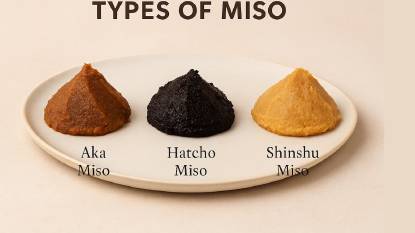
Here are some widely used varieties of miso, each with distinct characteristics:
-
Aka miso — also known as sendai-miso, inaka-miso, or red miso
This robust, reddish-brown paste has a strong, salty flavor and is typically made from barley. It’s ideal for hearty soups, stews, and braised dishes, especially in colder months when bold flavors are preferred. -
Hatcho miso
A deeply pungent and salty miso with a thick, grainy texture and dark brown to black color. Made exclusively from soybeans, Hatcho miso is aged for up to three years and used sparingly to add depth and richness to broths and sauces. It’s especially popular in the Aichi region of Japan. -
Shinshu miso
This golden-yellow, all-purpose miso is one of the most commonly consumed varieties in Japan. It has a mellow flavor with a relatively high salt content, making it suitable for everyday cooking—from soups and dressings to marinades and glazes.
Whether you’re exploring miso for its culinary versatility or its health benefits, understanding its origins and variations opens the door to a deeper appreciation of Japanese food culture. From delicate white miso to bold, aged varieties, each type offers a unique flavor experience shaped by centuries of tradition and regional nuance.
Featured Articles
Explore rich culinary stories, exclusive chef interviews, and expert insights from kitchens around the world. Discover cooking techniques, ingredient spotlights, and behind-the-scenes looks at the tools that shape global cuisine.

Georges Auguste Escoffier: Visionary Chef Who Revolutionized French Cuisine and Modern Cooking
Discover the life and legacy of Georges Auguste Escoffier, the legendary chef who transformed French cuisine and laid the foundation for modern culinary arts. This comprehensive historical profile …

How to Use a Knife, Fork, and Spoon
Master the basics of Western table etiquette with this guide to using a knife, fork, and spoon. Learn practical tips, cultural context, and the subtle rules that shape how we dine.

The History of Chocolate
Trace the fascinating history of chocolate—from its ancient origins with the Olmecs and Maya to its transformation into a global indulgence. Explore how cacao evolved from sacred ceremonial drink to …
Georges Auguste Escoffier: Visionary Chef Who Revolutionized French Cuisine and Modern Cooking
Discover the life and legacy of Georges Auguste Escoffier, the legendary chef who …
How to Use a Knife, Fork, and Spoon
Master the basics of Western table etiquette with this guide to using a knife, fork, and …
The History of Chocolate
Trace the fascinating history of chocolate—from its ancient origins with the Olmecs and …