On the Best Foie Gras

By: Simon
February 12, 2019 | Updated: February 17, 2026
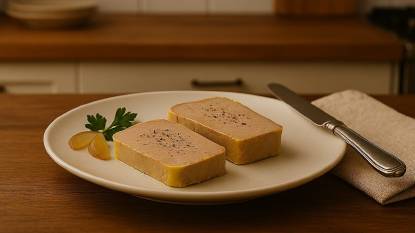


🦆 Foie Gras: The Luxurious Delicacy of Duck and Goose Liver
“We grade all foie gras in three groups,” said M. Barbuer. “Extra are the best one. They go into whole blocks of foie gras naturel, the finest, most expensive variety. People in your country always confuse it with Pâté de Foie Gras and Crème de Foie Gras, for which we sometimes use the second best quality, called sur-choix. There is also a third best quality, choix, but we don’t bother much with that.” He let his hand flop down. “The best goose livers are not big; one pound and a half is the ideal weight. Ours are yellow, not white, like the ones that were imported before the war from Hungary, Czechoslovakia, and Rumania. Our peasants feed their geese with yellow maize, which accounts for the color. Personally I like the yellow ones better. Their aroma is finer, and you know why?” M. Barbier fondly graded two extra specimens and produced another set of fingerprints. “Because out peasants in the Dordogne, Landes, the Basses-Pyrénées, and the Haute-Savoie may have six or ten or twenty geese, butnever more than thirty. No mass production, mon cher monsieur. Mass production is the ruin of the grande cuisine.
From the book Black Truffles in Blue Trout and Black Truffles, by Joseph Wechsberg. Chicago: Academy Chicago Publishers, 1985. (sponsored link)
🧑🍳 What Is Foie Gras?
Foie gras (French for “fat liver”) is a gourmet delicacy made from the liver of ducks or geese that have been specially fattened through a process called gavage. This centuries-old culinary tradition is most famously associated with French cuisine, where foie gras is served as pâté, mousse, or seared medallions.
Its rich, buttery texture and umami depth make it a prized ingredient in haute cuisine, often paired with brioche, fig compote, or sweet wine reductions.
📜 History and Origins
Foie gras dates back to ancient Egypt, where geese were observed naturally overfeeding before migration. The technique was refined in Roman times and later perfected in France, particularly in regions like Alsace and Périgord.
Today, foie gras remains a symbol of luxury and culinary craftsmanship, though its production has sparked ethical debates worldwide.
🍽️ Culinary Uses
- Terrine or Pâté: Served cold with toast or crackers.
- Seared Foie Gras: Pan-fried and plated with fruit reductions or balsamic glaze.
- Foie Gras Mousse: Whipped and piped into canapés or layered in savory mille-feuille.
- Garnish: Used to elevate dishes like steak, risotto, or eggs Benedict.
🧪 Nutrition Facts (Per 100g)
Source: FoodStruct
| Nutrient | Amount | % Daily Value |
|---|---|---|
| 🔥 Calories | 462 kcal | — |
| 🧈 Total Fat | 43.8 g | 67% |
| 🥩 Protein | 11.4 g | 23% |
| 🍞 Carbohydrates | 4.7 g | 2% |
| 💧 Water | 37 g | — |
| 🧂 Ash | 3.1 g | — |
| 🧬 Vitamin B12 | 111% DV | — |
| 👁️ Vitamin A | 32% DV | — |
| 🧠 Iron | 9% DV | — |
| ⚡ Copper | 13% DV | — |
🧠 Note: Foie gras is high in monounsaturated fats, which may support cardiovascular health when consumed in moderation.
🧘 Health Benefits
Despite its richness, foie gras offers several nutritional perks:
- ✅ High in Vitamin B12: Supports red blood cell formation and neurological function.
- ✅ Rich in Vitamin A: Promotes eye health and immune support.
- ✅ Contains Iron and Copper: Essential for energy metabolism and oxygen transport.
- ✅ Anti-inflammatory fats: Mostly monounsaturated, which may reduce heart disease risk.
⚠️ Ethical Considerations
The gavage method—force-feeding birds to enlarge their livers—has led to bans in several countries and cities. Critics argue it causes undue stress and health issues for the animals. Alternatives like “natural foie gras” (from spontaneously fattened birds) are emerging, though not yet widespread.
🌍 Sustainability and Alternatives
- 🐓 Ethical Producers: Some farms use humane practices and offer transparency.
- 🌱 Plant-Based Foie Gras: Made from mushrooms, lentils, or nuts to mimic texture and flavor.
- 🧪 Lab-Grown Liver: A future-forward solution under development.
Foie gras is a culinary treasure with a complex legacy. Its velvety richness and nutritional density make it a standout in gourmet kitchens, but ethical concerns continue to shape its future. Whether you’re a chef, food writer, or curious epicurean, understanding foie gras means appreciating both its flavor and its footprint.
Featured Articles
Explore rich culinary stories, exclusive chef interviews, and expert insights from kitchens around the world. Discover cooking techniques, ingredient spotlights, and behind-the-scenes looks at the tools that shape global cuisine.

Georges Auguste Escoffier: Visionary Chef Who Revolutionized French Cuisine and Modern Cooking
Discover the life and legacy of Georges Auguste Escoffier, the legendary chef who transformed French cuisine and laid the foundation for modern culinary arts. This comprehensive historical profile …
How to Use a Knife, Fork, and Spoon
Master the basics of Western table etiquette with this guide to using a knife, fork, and spoon. Learn practical tips, cultural context, and the subtle rules that shape how we dine.
The History of Chocolate
Trace the fascinating history of chocolate—from its ancient origins with the Olmecs and Maya to its transformation into a global indulgence. Explore how cacao evolved from sacred ceremonial drink to …
Georges Auguste Escoffier: Visionary Chef Who Revolutionized French Cuisine and Modern Cooking
Discover the life and legacy of Georges Auguste Escoffier, the legendary chef who …
How to Use a Knife, Fork, and Spoon
Master the basics of Western table etiquette with this guide to using a knife, fork, and …
The History of Chocolate
Trace the fascinating history of chocolate—from its ancient origins with the Olmecs and …