The Wide World of Chiles

By: Simon
February 12, 2019 | Updated: February 17, 2026
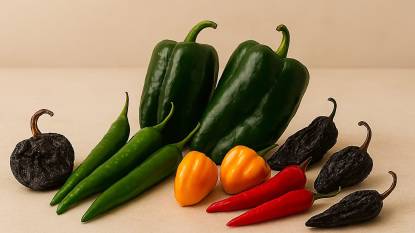


You could not count the number of chiles — fresh and dried, pickled and ground — that greet you when you enter a Mexican market center. The chile is ancient — evidence in Mexico traces it back to 3500 BCE. In the 16th century, the Portuguese explorers brought these fiery wonders from the Americas to Southeast Asia and China, and cooking the world over has never been the same.
Some chiles are hotter than others by nature, though there is no way to know if the mild-mannered poblano you hold is not in fact a fire bomb. In Mexico they are also used as thickeners, pickles, vegetables, even as textile dyes and in traditional medicines. Chiles are hottest closest to the stem, and the heat carries down through the white fleshy part and the veins. A chile’s seeds, contrary to popular belief, are not its hottest part, but their proximity to the white flesh has made them guilty by association. Chiles are used fresh, dried, roasted, soaked, ground, and charred. Each procedure alters the flavor and heat of the chile, and brings a new voice to the dish. This is why when a mole sauce calls for four each of five different chiles, it is not merely an exercise in over-kill or intimidation!
Here’s a short list of some choice chiles:
Ancho
a mellow, dried poblano, brown in color
Arbol
thin and dry, also called Chinese hot peppers
Cascabel
plum-shaped, dried, and blood-red with a rich flavor and medium heat
Chilaca
when dried, it’s called a pasilla; it’s long, thin, and often twisted, turns from dark green to brown when mature, and can be mild or medium hot
Chipotle
dried and smoked jalapenos
Guajillo
a dried, deep red chile with a tough skin — it’s pointy and long and can be very hot
Guero
a generic name for yellow chiles
Habanero
squat, orange chiles that are hotter even than serranos
Poblano
large, deep green-black chile with a mild to sharp flavor that’s used for chiles rellenos
Serrano
small, hot, and thin – its skin turns from green to red to yellow as it ages
Chile Peppers: Heat, History, and Health in Every Bite
Chile peppers—also spelled chili or chilli—are the fiery fruits of the Capsicum genus, beloved worldwide for their heat, flavor, and versatility. From ancient Mesoamerican rituals to modern fusion cuisine, these vibrant berries have ignited palates and cultures for over 6,000 years.
🧬 Botanical Profile
- Genus: Capsicum
- Family: Solanaceae (Nightshade)
- Species:
- Capsicum annuum: Jalapeño, Cayenne, Poblano
- Capsicum chinense: Habanero, Ghost Pepper
- Capsicum frutescens: Tabasco, Thai Chili
- Capsicum baccatum: Ají Amarillo
- Capsicum pubescens: Rocoto, Manzano
- Fruit Type: Technically a berry
- Heat Compound: Capsaicin (measured in Scoville Heat Units)
🌍 Origins and Global Spread
Chile peppers originated in Mesoamerica—specifically modern-day Mexico, Peru, and Bolivia. Cultivated by the Aztecs and Mayans, they were used in food, medicine, and even spiritual rituals.
🌐 Global Journey
- 🛶 First cultivated ~6,000 BCE
- 🚢 Spread to Europe via Columbus in 1493
- 🌏 Disseminated across Asia and Africa by Portuguese and Spanish traders
- 🌶️ Now grown in over 100 countries
🍽️ Culinary Uses
Chile peppers are used fresh, dried, smoked, fermented, and powdered. Their flavor profiles range from sweet and fruity to smoky and blisteringly hot.
🔥 Common Culinary Forms
- Fresh: Salsas, stir-fries, salads
- Dried: Moles, stews, spice blends
- Powdered: Paprika, chili powder
- Fermented: Hot sauces, kimchi
- Infused: Oils, vinegars, spirits
🌶️ Popular Varieties
| Pepper | Scoville Units | Flavor Profile |
|---|---|---|
| Jalapeño | 2,500–8,000 | Grassy, mild heat |
| Habanero | 100,000–350,000 | Fruity, intense heat |
| Poblano | 1,000–2,000 | Earthy, mild |
| Ghost Pepper | 800,000–1,000,000 | Smoky, extreme heat |
| Thai Chili | 50,000–100,000 | Sharp, pungent |
🧂 Nutrition and Health Benefits
Chile peppers are low in calories but rich in bioactive compounds and micronutrients.
🥗 Nutritional Snapshot (per 15g raw red chili)
- Calories: 6
- Water: 88%
- Protein: 0.3g
- Carbs: 1.3g
- Fiber: 0.2g
- Fat: 0.1g
🌟 Key Nutrients
- 🧬 Vitamin C: Boosts immunity and collagen production
- 🔋 Vitamin B6: Supports metabolism
- 🦴 Vitamin K1: Essential for blood clotting
- 💓 Potassium: Regulates blood pressure
- 🧠 Copper: Supports brain and bone health
- 👁️ Vitamin A (Beta Carotene): Promotes vision and skin health
🧪 Bioactive Compounds
- Capsaicin: Anti-inflammatory, pain relief, metabolism boost
- Capsanthin: Antioxidant in red peppers
- Lutein: Eye health (green peppers)
- Violaxanthin: Antioxidant in yellow peppers
- Ferulic & Sinapic Acid: May protect against chronic diseases
🧘 Health Effects
✅ Benefits
- 🔥 Boosts metabolism and fat oxidation
- 🛡️ Rich in antioxidants
- 💊 May reduce pain sensitivity
- ❤️ Supports cardiovascular health
- 🧬 Anti-inflammatory properties
⚠️ Cautions
- May cause digestive discomfort in sensitive individuals
- Excessive heat can irritate mucous membranes
- Not recommended for those with ulcers or IBS
🎭 Cultural Significance
Chile peppers are deeply embedded in global culinary traditions.
🌎 Regional Highlights
- 🇲🇽 Mexico: Mole, salsa, street food
- 🇹🇭 Thailand: Curries, som tam, stir-fries
- 🇮🇳 India: Chutneys, curries, pickles
- 🇰🇷 Korea: Kimchi, gochujang
- 🇺🇸 USA: Hot sauces, Tex-Mex, BBQ rubs
🎉 Festivals
- 🌶️ Hatch Chile Festival (New Mexico)
- 🔥 Chili Eating Contests worldwide
- 🏆 Guinness records for pepper consumption
Featured Articles
Explore rich culinary stories, exclusive chef interviews, and expert insights from kitchens around the world. Discover cooking techniques, ingredient spotlights, and behind-the-scenes looks at the tools that shape global cuisine.

Georges Auguste Escoffier: Visionary Chef Who Revolutionized French Cuisine and Modern Cooking
Discover the life and legacy of Georges Auguste Escoffier, the legendary chef who transformed French cuisine and laid the foundation for modern culinary arts. This comprehensive historical profile …

How to Use a Knife, Fork, and Spoon
Master the basics of Western table etiquette with this guide to using a knife, fork, and spoon. Learn practical tips, cultural context, and the subtle rules that shape how we dine.

The History of Chocolate
Trace the fascinating history of chocolate—from its ancient origins with the Olmecs and Maya to its transformation into a global indulgence. Explore how cacao evolved from sacred ceremonial drink to …
Georges Auguste Escoffier: Visionary Chef Who Revolutionized French Cuisine and Modern Cooking
Discover the life and legacy of Georges Auguste Escoffier, the legendary chef who …
How to Use a Knife, Fork, and Spoon
Master the basics of Western table etiquette with this guide to using a knife, fork, and …
The History of Chocolate
Trace the fascinating history of chocolate—from its ancient origins with the Olmecs and …