Cookware: A Definitive Guide

By: Simon
August 29, 2025 | Updated: February 17, 2026
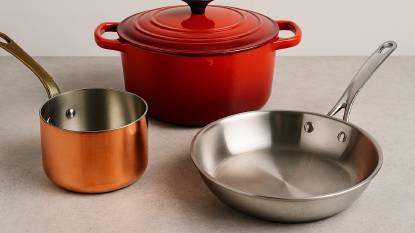


In the architecture of a serious kitchen, cookware is foundational. It shapes heat, influences flavor, and defines technique. For cooks who value control, durability, and culinary integrity, three materials stand apart: copper, enameled cast iron, and multi-ply stainless steel.
This guide is not a shopping list. It’s a framework for understanding how cookware works—and why these three categories continue to dominate professional kitchens and refined home setups alike.
🟠 Copper: The Precision Instrument
Copper cookware is the most thermally responsive material in cookware. It heats quickly, cools instantly, and distributes temperature with surgical accuracy. That’s why it’s favored by pastry chefs, sauciers, and anyone working with delicate preparations.
Copper cookware excels in techniques that demand rapid heat control and even distribution—making it indispensable for tasks like sugar work, emulsification, and reduction sauces. Use a copper saucepan to master beurre blanc, hollandaise, or caramel, where temperature shifts must be immediate and precise. For pastry chefs, copper bowls are ideal for whipping egg whites to stiff peaks due to their ionic interaction with proteins. In savory applications, copper sauté pans shine when deglazing for pan sauces or gently poaching fish. Recipes like sole meunière, sabayon, or citrus curd benefit from copper’s responsiveness, ensuring delicate textures and flavors are preserved without scorching.
Copper is Good for:
- Rapid temperature adjustments and precision cooking
- Emulsions, reductions, and sugar work
- Poaching delicate proteins (e.g. fish, eggs)
- Whipping egg whites in copper bowls
- French sauces like beurre blanc and hollandaise
- Caramel, curd, and pastry techniques requiring exact heat control
What Sets It Apart
- Conductivity: Copper reacts to heat changes faster than any other cookware metal.
- Control: Ideal for emulsions, sugar work, and temperature-sensitive sauces.
- Craftsmanship: Most copper cookware is hand-formed, often in France or Belgium, with a heritage that spans centuries.
Construction Notes
Raw copper is reactive, so most cookware is lined with stainless steel or tin. Tin offers better non-stick properties but wears out over time. Stainless steel is more durable, though slightly less conductive.
Practical Considerations
- Requires regular polishing to maintain its shine.
- Not dishwasher-safe.
- Expensive, but built to last.
Recommended Brands
Sponsored links
- Mauviel: French-made, available in both tin and stainless linings.
- Falk Culinair: Heavy-gauge, brushed finish, tin-lined.
- Matfer Bourgeat: Professional-grade, often found in culinary schools.
Copper is for cooks who treat heat like a language. It’s not forgiving, but it’s expressive. In the right hands, it’s transformative.
🔴 Enameled Cast Iron: The Slow-Burn Specialist
Enameled cast iron is the heavyweight champion of cookware. It retains heat like no other, making it perfect for braising, baking, and slow cooking. The enamel coating eliminates the need for seasoning and makes it safe for acidic ingredients.
Enameled cast iron is built for slow, moisture-rich cooking techniques like braising, stewing, and baking—where heat retention and even distribution are paramount. Use a Dutch oven to prepare classics like coq au vin, beef bourguignon, or Moroccan tagine, where long simmering extracts deep flavor and tenderizes tough cuts. Its oven-safe design makes it perfect for baking crusty sourdough bread or slow-roasting pork shoulder. The enamel coating allows for acidic ingredients like tomatoes and wine, making it ideal for chili, shakshuka, or cassoulet. Whether you’re caramelizing onions over low heat or layering a lasagna for oven finish, enameled cast iron delivers consistent results across stovetop and oven.
Enameled Cast Iron is Good for:
- Slow braising and long-simmered stews
- Baking crusty sourdough and rustic breads
- Acidic recipes like chili, shakshuka, and tomato sauces
- One-pot meals and oven-to-table serving
- Roasting meats and vegetables evenly
- Comfort food classics: cassoulet, coq au vin, beef bourguignon
What Sets It Apart
- Heat Retention: Once hot, it stays hot—ideal for low-and-slow cooking.
- Non-Reactive Surface: The enamel allows for tomato-based sauces, wine reductions, and long simmers.
- Visual Appeal: Available in rich, saturated colors that transition seamlessly from oven to table.
Construction Notes
The enamel is a glass-like coating fused to the iron. It’s non-stick, non-reactive, and easy to clean. Matte finishes (like Staub’s) offer better browning; glossy finishes (like Le Creuset’s) are more resistant to staining.
Practical Considerations
- Heavy and bulky.
- Enamel can chip if mishandled.
- Longer preheat times than copper or steel.
Recommended Brands
Sponsored links
- Le Creuset: Iconic colorways, lifetime warranty.
- Staub: Matte enamel, self-basting lids.
- Lodge: Budget-friendly, American-made.
Cast iron is the “heirloom” category—built to last, passed down, and often gifted. It’s less about technique and more about ritual: the Sunday roast, the winter stew, the sourdough boule.
⚪ Multi-Ply Stainless Steel: The Modern Workhorse
Multi-ply stainless steel is the most versatile cookware category. It combines the durability of stainless steel with the conductivity of aluminum or copper cores, offering balanced performance across a wide range of cooking styles.
Multi-ply stainless steel cookware is optimized for high-heat techniques like searing, sautéing, and deglazing—making it the go-to for everyday cooking. Its layered construction ensures even browning, perfect for dishes like pan-seared scallops, chicken piccata, or steak au poivre. Stainless steel skillets are ideal for building fond, the caramelized base that elevates pan sauces and gravies. Use saucepans for boiling pasta, steaming vegetables, or preparing risotto, where consistent heat and non-reactive surfaces matter. For induction users, multi-ply stainless steel offers full compatibility without sacrificing performance. From weekday stir-fries to weekend brunch frittatas, this cookware adapts to nearly any recipe with reliability and finesse
Multi-Ply Stainless Steel is Good for:
- Searing, sautéing, and browning proteins
- Deglazing and building pan sauces
- Boiling, steaming, and everyday stovetop cooking
- Induction cooktops and high-heat applications
- Stir-fries, frittatas, and risottos
- Recipes requiring non-reactive surfaces and consistent heat
What Sets It Apart
- Durability: Scratch-resistant, dishwasher-safe, and non-reactive.
- Compatibility: Works on all cooktops, including induction.
- Balance: Not as fast as copper or as heavy as cast iron, but reliable and consistent.
Construction Notes
Most sets are tri-ply (steel-aluminum-steel), though higher-end models use five or seven layers. Some brands incorporate copper cores for added responsiveness.
Practical Considerations
- Can discolor with high heat.
- Requires oil or butter to prevent sticking.
- More affordable than copper, more agile than cast iron.
Recommended Brands
Sponsored links
- All-Clad: Industry benchmark, made in USA.
- Hestan: NanoBond technology, ultra-durable.
- Ruffoni: Decorative, often with copper cores.
Stainless steel is the “default upgrade”—ideal for cooks transitioning from non-stick or budget sets. It’s clean, consistent, and built for repetition.
🧠 Comparison Table
| Feature | Copper | Enameled Cast Iron | Multi-Ply Stainless Steel |
|---|---|---|---|
| Heat Conductivity | ⭐⭐⭐⭐⭐ | ⭐⭐ | ⭐⭐⭐⭐ |
| Heat Retention | ⭐⭐ | ⭐⭐⭐⭐⭐ | ⭐⭐⭐ |
| Reactivity | Lined (non-reactive) | Non-reactive enamel | Non-reactive |
| Weight | Light to medium | Heavy | Medium |
| Maintenance | High | Medium | Low |
| Aesthetic Appeal | High (luxury) | High (colorful) | Moderate (sleek) |
| Best For | Precision cooking | Slow braising | Everyday versatility |
Cookware isn’t just a tool—it’s a signal. It tells you how a cook thinks, what they value, and how they move through the kitchen. Copper speaks to precision. Cast iron speaks to patience. Stainless steel speaks to consistency.
🎬 Picking The Right Pan For Every Recipe
Featured Articles
Explore rich culinary stories, exclusive chef interviews, and expert insights from kitchens around the world. Discover cooking techniques, ingredient spotlights, and behind-the-scenes looks at the tools that shape global cuisine.

Georges Auguste Escoffier: Visionary Chef Who Revolutionized French Cuisine and Modern Cooking
Discover the life and legacy of Georges Auguste Escoffier, the legendary chef who transformed French cuisine and laid the foundation for modern culinary arts. This comprehensive historical profile …

How to Use a Knife, Fork, and Spoon
Master the basics of Western table etiquette with this guide to using a knife, fork, and spoon. Learn practical tips, cultural context, and the subtle rules that shape how we dine.
The History of Chocolate
Trace the fascinating history of chocolate—from its ancient origins with the Olmecs and Maya to its transformation into a global indulgence. Explore how cacao evolved from sacred ceremonial drink to …
Georges Auguste Escoffier: Visionary Chef Who Revolutionized French Cuisine and Modern Cooking
Discover the life and legacy of Georges Auguste Escoffier, the legendary chef who …
How to Use a Knife, Fork, and Spoon
Master the basics of Western table etiquette with this guide to using a knife, fork, and …
The History of Chocolate
Trace the fascinating history of chocolate—from its ancient origins with the Olmecs and …