The Ritual of Dim Sum, or, Why I Love Chicken Feet

By: Melissa Clark
May 2, 1998 | Updated: February 17, 2026
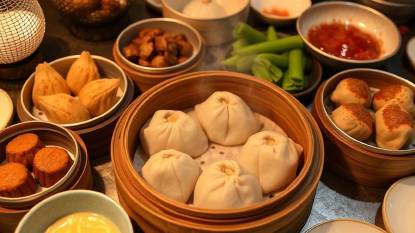


I cannot remember the first time I ever ate dim sum, but I can remember the first time I ate chicken feet, boiled in the kosher soup my grandmother made for Friday night dinner. They were spread out on a china plate, pale and bloated next to the border of tiny pink rosebuds. It never occurred to me not to partake. There was no surrounding taboo, no disgust at consuming bird feet. I just ate them, and they were good: soft, fatty, and salty, the perfect child’s food…as much a game as they were a dinner. First, I bit the center pad off the foot, which detached in a sinewy lump. That was the prime morsel, the fillet mignon of chicken feet. Then I nibbled the cartilage running up the leg. The toes, which were the most fun, went last, one claw at time. As daintily as an eight-year-old might manage, I spat out the bones. By the time I went through this elaborate technique with each foot (usually two or three), dinner was over, and I was excused from eating stringy pot-roast over the protests of my grandmother, who, though legally blind, could somehow still see the uneaten slabs of meat on my plate.
Friday night dinners were abandoned when my grandmother died; I was twelve. Since my parents didn’t make chicken soup with feet, I didn’t have my favorite dish again until college, when my family discovered the pleasures of dim sum.
We started going for dim sum for convenience. Chinatown was a perfect halfway point between Flatbush (in Brooklyn), where my parents live, and Morningside Heights (on the Upper West Side of Manhattan), where I went to school. Since as a college student I certainly wasn’t going to waste a weekend night having dinner with my parents, a weekend breakfast of dim sum seemed just right
And so the ritual began. About one Sunday a month I woke to my alarm at 8:30, and rode the subway down to Canal Street to meet my parents for breakfast. While in China dim sum is mostly thought of as a tea time meal, or snack, in New York’s Chinatown, the crowds start early. By 11:00 in the morning you cannot get a seat, and it remains crowded until at least 3:00. My parents insisted that the freshest and best dim sum was to be had early in the morning, so we always met around 10:00, finishing before the crowds descended.
Having dim sum became the time I spent with my family, and it remains so to this day. It was at dim sum that I introduced my parents to my boyfriends, putting them through what I called “trial by dim sum” to see if they could stomach spicy pork tripe, salt-fried squid, or beef dumplings before noon. I fell in love with my ex-husband as I watched him nibble the web between stewed duck’s feet and eat the heads off shrimp. Years later, I broke the news of the divorce to my parents while poking at fried taro cakes with the chopsticks, unable to eat.
Fortunately, a loss of appetite is the exception to my dim sum experiences, which is important since the food never stops. At dim sum, the dishes come quickly in what seems like a never ending succession: deep-fried crab balls, tripe, congee, green scallion dumplings, shrimp rice noodles, fried eggplant, snails in black bean sauce, mussels with chilies, and soft, slightly sweet pork buns – a favorite with friends who would rather be at brunch, but whom I drag to dim sum. You see, we like to go with as many people as possible, so we can sample a wide variety of little dishes as they pass on steel carts, pushed by uniformed women who announce their cargo in Chinese as they go from table to table. Sometimes, the women walk quickly by our table, certain that we (as non-Asians) wouldn’t like the food they were offering, like chicken feet. It always surprises them when I call for the feet, served, not pale and bloated like at my grandmother’s house, but rich and brown and braised in a spicy sauce. I still eat them according to the technique I developed as a child, which I hope to be able to teach to my children during dim sum one day. Of course when they grow up, they may abandon dim sum in favor of some other ritual. Like Friday night dinner. Luckily, the technique will still serve them well.
Handicrafts: Hong Kong Dim Sum Documentary
Featured Articles
Explore rich culinary stories, exclusive chef interviews, and expert insights from kitchens around the world. Discover cooking techniques, ingredient spotlights, and behind-the-scenes looks at the tools that shape global cuisine.

Georges Auguste Escoffier: Visionary Chef Who Revolutionized French Cuisine and Modern Cooking
Discover the life and legacy of Georges Auguste Escoffier, the legendary chef who transformed French cuisine and laid the foundation for modern culinary arts. This comprehensive historical profile …
How to Use a Knife, Fork, and Spoon
Master the basics of Western table etiquette with this guide to using a knife, fork, and spoon. Learn practical tips, cultural context, and the subtle rules that shape how we dine.
The History of Chocolate
Trace the fascinating history of chocolate—from its ancient origins with the Olmecs and Maya to its transformation into a global indulgence. Explore how cacao evolved from sacred ceremonial drink to …
Georges Auguste Escoffier: Visionary Chef Who Revolutionized French Cuisine and Modern Cooking
Discover the life and legacy of Georges Auguste Escoffier, the legendary chef who …
How to Use a Knife, Fork, and Spoon
Master the basics of Western table etiquette with this guide to using a knife, fork, and …
The History of Chocolate
Trace the fascinating history of chocolate—from its ancient origins with the Olmecs and …